
Anti-Inflammatory Nutrition for HIIT Recovery
Inflammation has become one of the most discussed and least understood concepts in fitness nutrition. The conventional narrative — that inflammation is bad, anti-inflammatory foods are good, and you should aggressively suppress all inflammation through diet and supplements — has the appeal of simplicity and just enough truth to be repeated endlessly. The problem is that it misses the more interesting and important reality: inflammation is essential to how your body adapts to HIIT, and indiscriminate suppression of it can actually undermine the very adaptations you're training for.
The right framework for anti-inflammatory nutrition in the context of HIIT isn't "minimize all inflammation always." It's "support healthy resolution of inflammation between sessions while letting the acute inflammatory signals from training drive adaptation." That's a more nuanced goal, but it leads to a more effective and sustainable approach to eating for recovery. This post walks through what inflammation actually does in the context of HIIT, which dietary strategies genuinely support recovery, and where the popular advice goes wrong.
What Inflammation Does During and After HIIT
When you complete a hard interval session, your muscles experience microtrauma — tiny tears in muscle fibers, mechanical stress on connective tissue, accumulation of metabolic byproducts. This damage triggers an acute inflammatory response that brings immune cells, signaling molecules, and repair processes to the affected tissue. Within hours of training, your body is actively breaking down damaged proteins, clearing debris, and beginning to rebuild stronger, more resilient tissue.
This acute inflammation is not a problem. It's the mechanism by which training works. The signaling molecules released during this inflammatory cascade — cytokines, prostaglandins, growth factors — are the very signals that tell your body to build more mitochondria, increase capillary density, strengthen connective tissue, and adapt to the demands placed on it. Suppress these signals too aggressively and you blunt the adaptive response, which is why high-dose anti-inflammatory drugs like ibuprofen taken around training have been shown to reduce muscle protein synthesis and impair training adaptations.
The inflammation that you actually want to manage is chronic, low-grade, systemic inflammation — the kind that comes from poor diet, inadequate sleep, chronic life stress, environmental factors, and over-training. This kind of inflammation doesn't drive adaptation; it interferes with it. It elevates baseline cortisol, impairs sleep quality, reduces mitochondrial efficiency, and accelerates many of the processes associated with poor health and aging. The goal of anti-inflammatory nutrition is to address this chronic inflammation while leaving the acute training-induced inflammation alone to do its job.
The Foundation: An Overall Anti-Inflammatory Eating Pattern
Before getting into specific foods, it's worth establishing the broader pattern that supports healthy inflammation across the board. The diets that show the strongest evidence for reducing chronic inflammation are characterized by abundance and variety of plant foods, regular fish or omega-3 sources, moderate intake of whole grains and legumes, healthy fats from olive oil and nuts, minimal ultra-processed foods, and limited added sugars and refined carbohydrates.
This pattern — sometimes called Mediterranean-style eating, sometimes broadly described as "whole-foods, plant-forward" — works not because of any single magic ingredient but because it consistently delivers a mix of nutrients that support healthy inflammatory regulation. The fiber feeds beneficial gut bacteria that produce anti-inflammatory metabolites. The polyphenols and antioxidants quench excessive oxidative stress. The omega-3 fatty acids support the production of resolvins and protectins that actively resolve inflammation. The lower glycemic load reduces insulin spikes that contribute to inflammatory signaling.
The first and most important step toward anti-inflammatory eating for HIIT recovery is shifting the foundation of your diet toward this pattern. Specific foods and supplements layered on top of a junk-food diet will accomplish much less than building the right base in the first place.
Foods That Genuinely Support Recovery
Within an overall good dietary pattern, certain foods carry particularly strong evidence for supporting recovery from intense exercise.
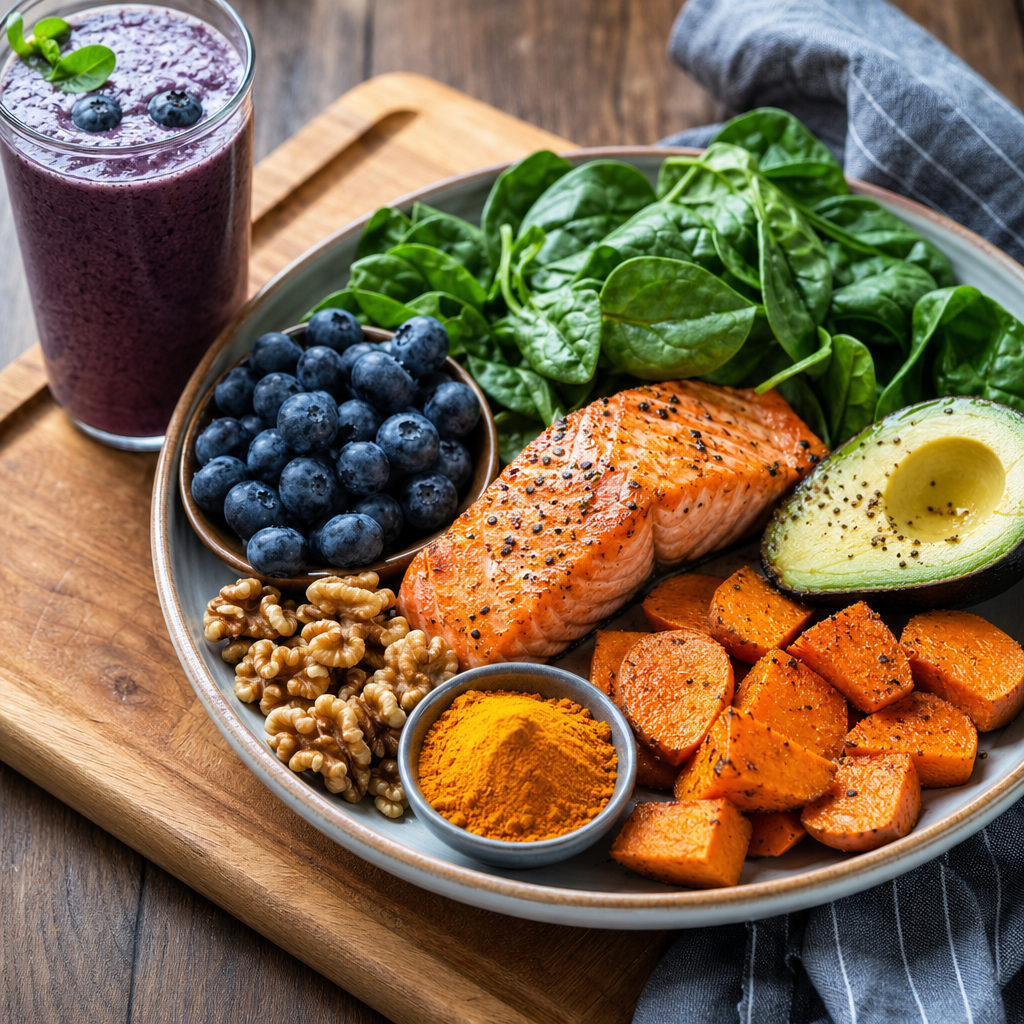
Fatty fish — salmon, mackerel, sardines, herring — provides EPA and DHA omega-3 fatty acids that support the resolution phase of inflammation. The current research suggests that consuming around 2 to 3 grams of EPA+DHA per day, whether from fish or supplements, supports faster recovery from intense training. Two or three servings of fatty fish per week, plus a fish oil or algae oil supplement, is a reasonable target for active people.
Tart cherries and tart cherry juice have accumulated impressive research evidence for reducing exercise-induced muscle damage and supporting recovery. Studies on athletes consuming concentrated tart cherry juice for several days around hard training have shown reduced strength loss, lower perceived soreness, and faster recovery of performance. The active compounds appear to be anthocyanins, the same purple-red pigments found in many other deeply colored fruits.
Berries of all kinds — blueberries, blackberries, raspberries, strawberries — provide a similar profile of polyphenols and anthocyanins. While individual studies on specific berries vary, the broader pattern is consistent: regular consumption of polyphenol-rich berries supports antioxidant capacity and reduces markers of exercise-induced oxidative stress.
Leafy green vegetables — spinach, kale, arugula, swiss chard — are nutritional powerhouses that deserve a regular place in athletic diets. The combination of vitamins, minerals, fiber, and phytochemicals supports nearly every aspect of recovery. The nitrates found in leafy greens (and in beets) have additional benefits for blood flow and exercise performance.
Turmeric contains curcumin, a compound with genuine anti-inflammatory effects. The catch is that curcumin is poorly absorbed when consumed alone, so traditional preparations that combine turmeric with black pepper (which contains piperine that dramatically improves curcumin absorption) and with fat (which improves uptake of the fat-soluble compounds) are far more effective than turmeric eaten by itself. A daily dose of turmeric in cooking or in golden milk-style preparations can support reduction of chronic inflammation.
Ginger has well-documented anti-inflammatory effects and may specifically reduce post-exercise muscle soreness in some studies. Adding ginger to teas, smoothies, and cooked dishes is an easy way to incorporate it.
Extra virgin olive oil contains oleocanthal, a compound with anti-inflammatory effects similar in mechanism to ibuprofen, plus a rich profile of polyphenols. Using olive oil as a primary cooking and dressing fat is one of the simpler high-impact dietary changes.
Walnuts and other tree nuts provide omega-3 ALA, magnesium, vitamin E, and a range of polyphenols. A daily small handful of nuts is consistently associated with reduced inflammatory markers in observational studies.
Cruciferous vegetables — broccoli, cauliflower, brussels sprouts, cabbage — contain sulforaphane and related compounds that activate the body's own antioxidant defense systems. These foods support recovery indirectly by enhancing your body's ability to manage oxidative stress from any source.
Train Hard, Recover Smart
The harder you train, the more recovery matters. Peak Interval helps you structure consistent, focused sessions, so you can pair your training with the nutrition strategies that actually move the needle on recovery.
Download Peak IntervalWhat to Limit or Avoid
The flip side of anti-inflammatory eating is reducing the foods that consistently promote chronic inflammation when consumed in significant amounts. The biggest contributors are predictable but worth restating clearly.
Ultra-processed foods — packaged snacks, fast food, sugary breakfast cereals, processed meats with preservatives, and most packaged baked goods — combine refined carbohydrates, refined oils, additives, and minimal fiber in ways that consistently elevate inflammatory markers in research. The occasional indulgence is fine; making these foods the foundation of your diet is genuinely problematic for recovery.
Excessive added sugar drives insulin spikes that contribute to inflammatory signaling. The natural sugars in whole fruits aren't a concern — fiber, water content, and the broader nutrient package change how those sugars affect the body. The added sugars in sodas, candy, sweetened coffee drinks, and processed foods are a different matter and benefit from being limited.
Refined seed oils consumed in large amounts — particularly the cheap, oxidized industrial oils used in fried fast food and in many processed products — promote inflammation. The picture is more nuanced than the popular narrative suggests; small amounts of these oils in home cooking aren't the problem. The problem is the cumulative dose from a diet built around restaurant fried foods, packaged snacks, and processed foods.
Excessive alcohol is genuinely inflammatory at meaningful intakes and interferes with recovery in multiple ways: disrupting sleep, impairing protein synthesis, interfering with hydration. Occasional moderate consumption is unlikely to derail an otherwise well-structured nutrition approach, but heavy or frequent drinking is one of the most reliable ways to undermine training adaptations.
Highly processed meats — bacon, sausage, hot dogs, deli meats with significant preservatives — have been associated with elevated inflammatory markers in numerous studies. These foods aren't off-limits, but they shouldn't be daily staples for anyone prioritizing recovery.
The Antioxidant Supplement Trap
Here's where popular advice and the actual research diverge most significantly. The intuitive logic — exercise produces oxidative stress, antioxidants combat oxidative stress, therefore antioxidant supplements should improve recovery and adaptation — turns out to be wrong, or at least more complicated than it appears.
Multiple studies have now shown that high-dose antioxidant supplementation, particularly vitamins C and E in pharmacological doses, can actually blunt training adaptations. The mechanism appears to be that the temporary oxidative stress from exercise is itself a signaling stimulus for adaptive responses — including the body's own antioxidant system upregulation. By suppressing this signal with megadoses of supplements, you reduce the very adaptations you're training for.
This doesn't mean antioxidants are bad. The evidence consistently supports antioxidants from whole foods — the polyphenols in berries, the carotenoids in vegetables, the flavonoids in tea — which come bundled with fiber, water, other nutrients, and dosing patterns that don't overwhelm the system. What it does mean is that the popular advice to supplement with high-dose vitamin C and E for "athletic recovery" is at best unhelpful and at worst counterproductive.
The same caution applies to other anti-inflammatory supplements consumed in pharmacological doses. Curcumin supplements, for example, can be useful for managing chronic inflammation but may also blunt adaptations when taken in high doses around training. The conservative approach is to get anti-inflammatory compounds primarily from food, save targeted supplements for periods of unusually heavy training or actual chronic inflammation, and avoid the "take everything in case it helps" mentality.
Hydration as Anti-Inflammatory Nutrition
Hydration is rarely framed as anti-inflammatory nutrition, but it deserves to be. Even mild dehydration impairs recovery, elevates perceived stress, and contributes to suboptimal cellular function. Adequate hydration supports lymphatic clearance of inflammatory byproducts, kidney filtration of metabolic waste, and the basic cellular processes that drive recovery.
For active people, water alone is usually sufficient outside of training. During and immediately after intense HIIT sessions, especially in heat, electrolyte replacement matters — sodium primarily, with smaller amounts of potassium and magnesium. A pinch of salt in your post-workout water, or a properly formulated electrolyte drink without excessive added sugars, supports rehydration more effectively than plain water alone.
The simple practice of starting your day with a large glass of water, drinking water consistently across the day, and topping up around training pays dividends for recovery that no specific food can match.
Putting It All Together: A Daily Recovery-Supporting Pattern
In practical terms, what does an anti-inflammatory diet for a HIIT athlete actually look like? The principles translate into something like this:
Build meals around vegetables, with a quarter to half of your plate being colorful plants of various kinds. Include a quality protein source — fatty fish two to three times per week, plus other lean proteins or plant proteins on other days. Use olive oil as your primary fat. Include berries or other deeply colored fruits daily. Add nuts or seeds most days. Drink green tea or herbal teas alongside or instead of additional caffeinated beverages. Cook with herbs and spices, particularly turmeric, ginger, garlic, and rosemary. Limit ultra-processed foods, added sugars, and excessive alcohol. Stay well-hydrated.
These patterns sound generic because they are. The same eating patterns that support cardiovascular health, brain health, metabolic health, and longevity also support athletic recovery. There's no special "athlete diet" that diverges from what's good for humans generally; there are just the same principles applied with attention to specific timing and quantity around training demands.
Final Thoughts
Anti-inflammatory nutrition for HIIT recovery is less about chasing specific superfoods or supplements and more about building an overall eating pattern that supports your body's natural ability to manage inflammation healthily. The goal isn't to suppress all inflammation — that would undermine the very adaptations you're training for — but to ensure that the chronic, background inflammation that interferes with recovery stays low while the acute, training-induced inflammation can do its adaptive work.
The athletes who recover well over the long arc of their training lives are the ones whose default diets support recovery without requiring constant deliberate effort. Get the broad pattern right, and the specific foods take care of themselves. Make recovery nutrition a permanent feature of how you eat rather than a special protocol you adopt around big training blocks, and you'll find that the cumulative effect compounds in ways that any single supplement or short-term diet can't match.