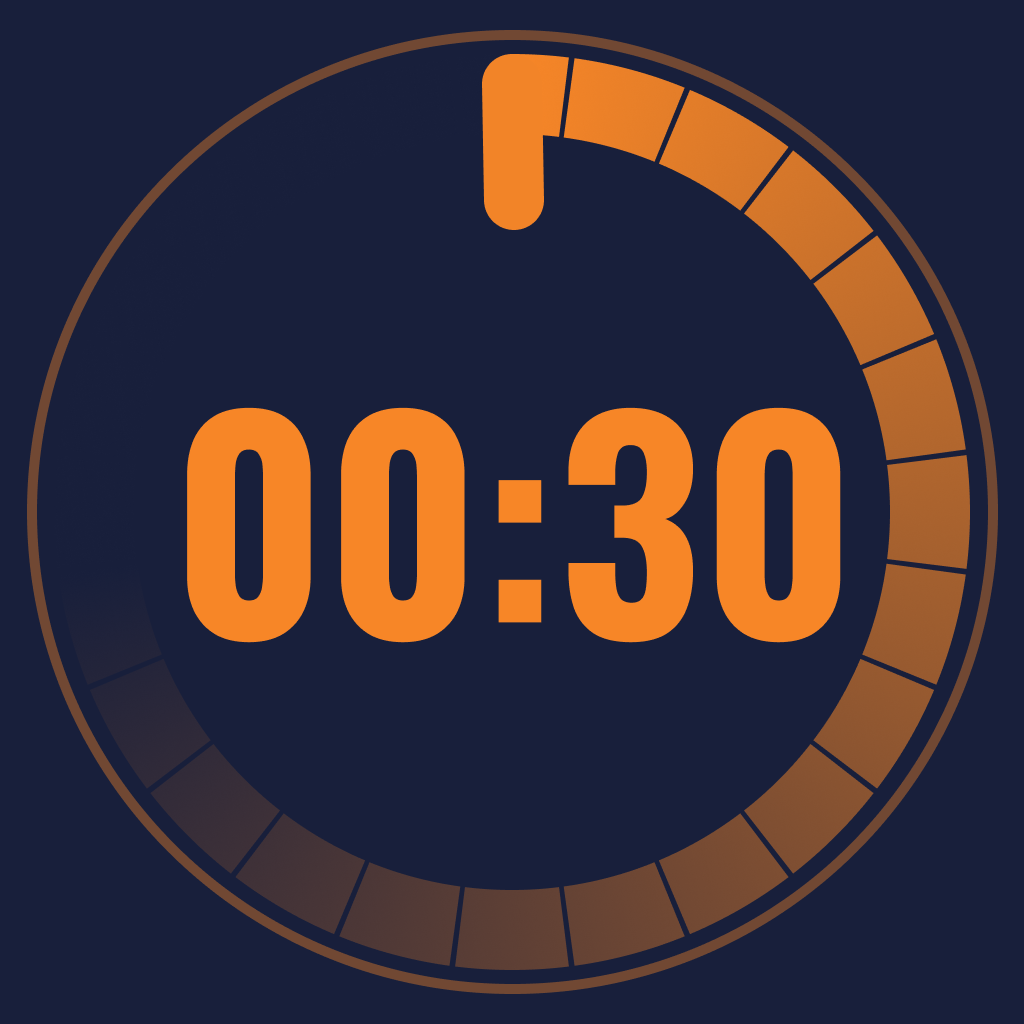
Best Boxing Round Timer: Three-Minute Rounds, the Ten-Second Warning and the Bell

You are on the bag with wrapped hands and a sweat-soaked shirt, and the phone is on a bench six metres away. The timer beeps. Was that the end of the round or the end of the rest? You glance over, lose your rhythm, and throw the next combination half a second late.
That is the whole problem with using a generic HIIT timer for boxing. A round is not a 20-second interval. It is three minutes long, it has a shape inside it, and it needs cues you can read without looking. Most timers get one or two of those right and miss the rest.
What a round timer has to do that an interval timer does not
Distinct cues for the start and the end of a round. In a gym, the bell that starts a round and the bell that ends it mean different things to your body. A timer that plays the same beep at every phase change forces you to keep count. Look for different sounds per phase, or voice announcements that say "round three" and "rest" out loud.
A warning before the bell. The ten-second clapper is what tells you to empty the tank. Without it, the last ten seconds of a three-minute round feel exactly like the previous 170, and you finish with something left. This is the feature most often missing from interval apps, because HIIT intervals are rarely long enough to need it.
A rest that runs itself. Between rounds you are breathing, shaking out your arms, maybe taking a drink. You should not have to walk to the phone and press anything. Every round, every rest, and the next round should chain automatically until the session ends.
Round lengths that are not fixed at three minutes. Amateur rounds are often two minutes, conditioning rounds can be 90 seconds, and many people shorten the rest from 60 seconds to 45 as they get fitter. A timer that only offers boxing presets will not keep up with how you actually train.
The ten-second warning, when your timer does not have one
Plenty of good timers do not offer a dedicated clapper setting. You can build one anyway with any timer that lets you chain named phases.
Split each round into two work phases: 2:50 called "Round" and 0:10 called "Finish". The phase change at 2:50 becomes your warning, and if the timer uses different sounds or voice for each phase, it sounds different from the end-of-round cue. Then add a 1:00 rest and repeat the block for however many rounds you want.
For a six-round session that is 6 × (2:50 + 0:10 + 1:00), or 24 minutes. Drop the final rest if you do not want to stand around for a minute at the end, and add a 10-second prep at the start so you can get your gloves on after pressing go.
Phone, Watch, or gym clock
A wall-mounted gym clock is the classic answer, and it is the right one if your gym already has it. At home or in a gym without one, your choice is between a phone and a wrist.
The phone is loud and visible, which is what you want for bag work. Prop it somewhere you can see it from your stance, turn the volume up, and make sure it will not lock or dim mid-round.
An Apple Watch wins when you cannot rely on hearing it: a busy gym with music, partner pad work where you are moving around, or skipping between rounds where the phone is out of sight. A haptic tap at each phase change is easy to feel through a wrap, as long as you are not wearing the Watch under your glove.
The best setup for many people is both: the phone across the room for the sound, the Watch on the wrist so nothing gets missed.
How Peak Interval handles a boxing session
Peak Interval lets you build the round as named phases, so the 2:50 + 0:10 split above takes a minute to set up and is then saved for next time. Each transition fires its own audio cue, with configurable sound packs and voice announcements, plus a haptic on the Watch. The rest phases run on their own, and a prep phase at the start gives you time to wrap up.
If you want the structure of the session itself — which rounds are technique, which are power, how to progress over weeks — that is covered in how to build a boxing interval workout. This post is only about the timer.
The short version
Before you pick a boxing round timer, check four things: different cues for round start and round end, a warning before the bell (or the ability to build one from two phases), rests that start themselves, and round lengths you can change. Test it through a full three-round session on the bag before you trust it, because a timer that seems fine with the phone in your hand is very different from one you are hearing from across the gym.