Circuit Training Timer: How to Rotate Stations Without Losing the Round
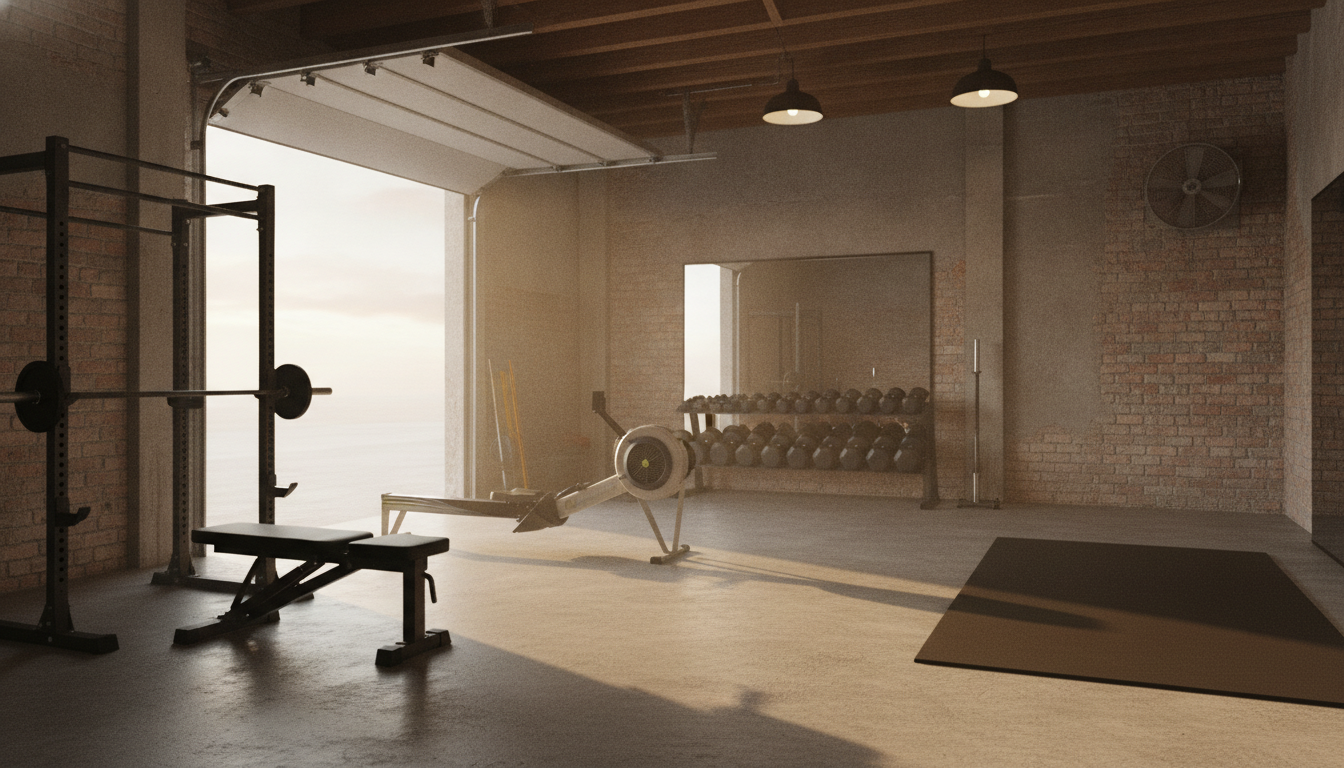
You have four stations set up: bench, rower, dumbbells, mat. Three rounds. By the second pass through you are standing at the dumbbells trying to remember whether this is round two or round three, and the timer, which has been beeping the same beep at every boundary, has no opinion.
That is the gap between an interval timer and a circuit timer. A plain interval timer repeats one work block and one rest block. A circuit is a different exercise at every station, often for a different length of time, with a walk between each and a round count you lose the moment you stop paying attention to it.
What a circuit actually asks of a timer
Write your circuit out and you will usually find four things a flat work/rest repeat cannot hold. The stations are not all the same length: 500 metres on the rower is closer to two minutes, while a plank is 45 seconds. There is a transition between each station that is not rest, it is walking and setting up. There is a longer rest at the end of each full lap. And there is a round count that matters, because the whole session is built around "three times through".
A timer that only offers work, rest and rounds forces you to pick one station length for everything, which means either cutting the rower short or standing around after the plank. It also gives you one beep for every kind of boundary, so a station change, a transition and the end of a round all sound identical.
Build it as one round, then repeat the round
The setup that holds up is to build a single lap of the circuit as its own block, station by station, and then wrap that block in a round count. For the garage circuit above, one lap looks like this:
- Bench step-ups, 45 seconds
- Transition, 15 seconds
- Row, 2 minutes
- Transition, 15 seconds
- Dumbbell thrusters, 45 seconds
- Transition, 15 seconds
- Plank, 45 seconds
- Round rest, 90 seconds
That lap is 6 minutes 30 seconds, so three rounds plus a 10-second prep comes to just under 20 minutes. Every number in it is something you chose for a reason, rather than a compromise forced by a timer that only knows one interval length.
In Peak Interval that is a set of named intervals with the round count on the outside, the same nesting described in how to set up repeating sets. Change the plank from 45 seconds to 60 and it changes in all three rounds at once.
Give transitions their own interval
The most common mistake in a station circuit is treating the walk as rest. If the rower is five steps from the bench, 15 seconds of "rest" is really 8 seconds of rest and 7 of strapping your feet in. Over twelve station changes that is the difference between a session that feels controlled and one where you start every station behind.
Make the transition an explicit interval, and name it after where you are going: "To rower" rather than "Rest". Then the label tells you where to walk, the countdown tells you how long you have to get set, and the work interval starts when you are actually in position. If you want the transition to double as recovery, lengthen it to 20 or 25 seconds rather than relying on a short rest to cover both. The 40/20 setup guide goes deeper on how much the walk eats out of a fixed ratio.
Make the round count impossible to lose
Losing count is the complaint that comes up most in circuit threads, and it is not a discipline problem. Your attention is on the exercise, which is exactly where it should be. The fix is for the timer to carry the count so you never have to.
Three things help. A visible "Round 2 of 3" on screen, large enough to read from the station furthest from your phone. A distinct cue for the round rest, so the end of a lap sounds different from an ordinary station change and you know without looking. And the round rest itself, which is a natural checkpoint: if the timer is running a 90-second rest, you are between laps, whatever your memory says.
On an Apple Watch this matters more, because in a station circuit your phone usually ends up on the floor at one end of the room. A haptic tap at each boundary and the round number on your wrist mean you can leave the phone where it is.
The short version
Write the circuit down first, with a real time for each station, then build one lap of it: stations, named transitions, and a longer round rest at the end. Wrap that lap in a round count, add a short prep, and give the round rest a different cue from the station changes. Once the timer is carrying the rotation, the transitions and the count, the only job left is the work at each station.