
Family HIIT: How Couples and Families Train Together
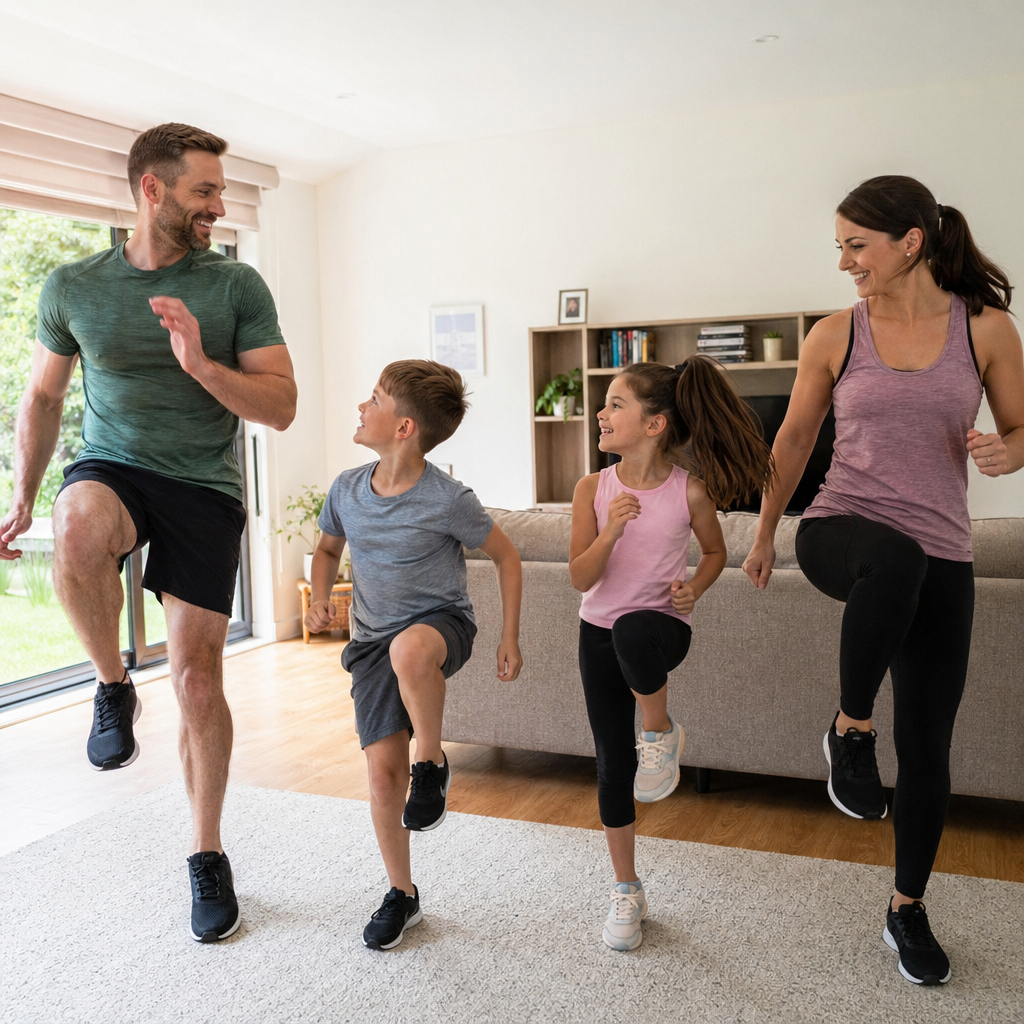
There's a particular kind of magic that happens when training stops being something you do alone and becomes something woven into the rhythm of your relationships. The couple who can both look forward to their Saturday morning HIIT session as time together. The parent and teenager whose post-school workouts are when the day's actual conversations finally happen. The whole family that turns Sunday afternoon into a mix of intervals, laughter, and mutual encouragement. These aren't the dramatic transformation stories that fill social media, but they're often the stories that have the deepest impact on the people living them.
This post collects real-world strategies and stories from couples and families who have successfully built HIIT into their shared lives. The patterns that work span enormous variety — from new couples in their twenties to multi-generational families training together — but certain principles show up consistently. If you've been thinking about training with the people you live with, or you're already trying and finding it harder than you expected, the experiences below offer practical templates you can adapt.
Why Training Together Works (When It Works)
The benefits of family or partner HIIT go well beyond the obvious physical ones. The most consistent theme from couples and families who've made it work is that shared training creates a particular kind of connection that's hard to replicate in other contexts.
Training together creates structured time without phones, without screens, without the distractions that fragment most modern relationships. Twenty minutes of intervals demands enough physical attention that you're genuinely present with each other, and the recovery periods between intervals naturally invite conversation. Many couples report that their best conversations happen during walks back from runs or while breathing between sets, when the deliberate awkwardness of "let's talk" has been replaced by the natural ease of being side by side doing something together.
Shared training also builds shared memory and shared identity. The couple that has done a hundred Saturday morning sessions together has built up a common language, inside jokes, shared milestones, and the particular kind of intimacy that comes from witnessing each other's effort and progress over time. For families with kids, this kind of shared physical experience contributes to the texture of family life in ways that are hard to articulate but that show up in the relationships years later.
The accountability dimension matters too. The session you might skip when training alone happens reliably when someone else is counting on you. The natural human tendency to disappoint others less easily than we disappoint ourselves becomes a feature rather than a bug.
That said, training together isn't automatically magical. The couples and families who make it work have generally figured out a few things that the ones who tried and abandoned it never did. Most of the rest of this post is about those things.
The Pacing Problem (And How to Solve It)
The single most common pitfall in couple or family HIIT is the pacing mismatch. Different bodies have different fitness levels, different histories, different injury patterns, and different optimal intensities. The training that's productive for one person might be too easy for another and too hard for a third. Without addressing this directly, shared training quickly becomes a source of frustration: one person feels held back, another feels constantly behind, and the resentment slowly poisons what was supposed to be connective.
The couples and families who solve this problem usually do it through one of three approaches.
Time-based intervals with self-selected effort: Instead of trying to match speeds or weights, everyone does the same time intervals (say, 40 seconds work, 20 seconds rest) at their own maximum effort. The interval timer becomes the shared structure, but each person works at their own appropriate intensity. This approach is by far the most flexible and works across enormous fitness differences. A husband and wife with very different fitness levels can both do a Tabata workout side by side, each working hard for their own body.
Stagger the work: One partner does work intervals while the other rests, then they switch. This creates active engagement and natural accountability without requiring matched effort. Partner-based circuits where one person works while the other coaches, counts, or rests is a classic format that scales easily.
Structured handicapping: For competitive couples, building in deliberate handicaps — different rep counts, different weights, different exercise variations — that bring effort into rough equivalence can preserve competition without making the outcome inevitable. This requires honesty about relative capacity and willingness to adjust as fitness changes.
The wrong solution is for the more advanced partner to perpetually "take it easy" to match the less advanced one. This produces under-stimulating workouts for one person and resentment for both. The right solution is for both people to work hard relative to their own capacity within a shared framework.
Couples Who Make It Work: Common Patterns
Among couples who have sustained shared HIIT practice for years, certain patterns show up repeatedly.
They protect a regular time. Most successful couples HIIT around a specific time block that's defended against other commitments — Saturday morning before the day fills up, Tuesday and Thursday evenings before dinner, daily lunch break sessions if they work from home together. The specific time matters less than the consistency. Trying to fit training in around other things rarely works long-term; building other things around training time does.
They keep sessions short. Twenty to thirty minutes including warmup is the sweet spot for most couples. Longer sessions are harder to commit to and become resented when life gets busy. Short, intense sessions can happen consistently for years; hour-long sessions tend to gradually disappear from the schedule.
They treat training time as relationship time. The couples who build the strongest practice tend to talk about their HIIT sessions the way other couples talk about date nights. It's not "going to the gym" — it's "our Tuesday workout." The framing matters because it shapes how easily the time gets sacrificed when other things compete for it.
They allow for individual training too. Counterintuitively, the couples who most successfully train together also typically have individual training they do separately. The shared sessions aren't expected to meet all of either person's training needs — they're a particular thread of the relationship, while individual goals get pursued individually. This reduces pressure on the joint sessions to be all things to both people.
They communicate honestly about how it's going. When the dynamic isn't working — when one person is feeling held back, when the schedule has stopped fitting, when motivation has eroded — they talk about it directly. Most failed couple training arrangements quietly atrophied because the smaller frustrations weren't named while they were still small.
Build Your Family's Training Routine With One Tool
Whether you're training with a partner, your kids, or your whole family, Peak Interval keeps everyone on the same timer. Save your favorite shared workouts, customize work and rest for any fitness level, and make consistent practice the new normal.
Download Peak IntervalIncluding Kids in HIIT (Without Ruining It for Anyone)
Families who train with their kids have to navigate some additional complexity, and the approaches that work tend to differ significantly from adult-only training.
For young children (ages 5-10), the goal usually isn't fitness in any traditional sense — it's positive association with movement, family time, and the modeling of active living. HIIT with this age group looks more like games structured with timed intervals: animal walks for 30 seconds, then rest, then jumping like a frog for 30 seconds, then rest. The format creates structure without requiring anything that resembles serious effort. The fitness benefit is real but secondary to the relational benefit.
For middle-school-age kids (ages 10-14), more recognizable HIIT becomes possible, with appropriate adjustments. Kids in this age range often genuinely enjoy timed interval work because it's structured and finite — they know exactly how long they have to push, and the rest is built in. Body-weight movements (jumping jacks, squat jumps, mountain climbers, push-ups, planks) are appropriate, and kids often surprise their parents by hanging right with them. Avoid heavy loading and avoid pushing intensity beyond what kids volunteer to give.
For teenagers, full HIIT participation is generally appropriate, and many teens find the format genuinely engaging when it's framed as athletic training rather than as exercise. The dynamic between parent and teenager during training can become one of the most rewarding parts of family fitness when handled well — it's one of the few contexts where parent and child are doing the same hard thing alongside each other rather than in adjacent activities.
The most important rule for family HIIT with kids of any age is that participation has to remain voluntary and positive. The fastest way to ruin children's relationship with exercise is to make HIIT feel like punishment or obligation. Kids who experience training as connective family time tend to keep training as adults; kids who experience it as forced discipline often spend their twenties unwinding the negative associations.
The Multigenerational Family Pattern
Some of the most striking family training stories involve multiple generations training together — adult children with their parents, grandparents with grandchildren, extended family at gatherings. The format that tends to work for multigenerational HIIT borrows heavily from the principles above but adds some specific elements.
Same time intervals, different intensity expectations. A 75-year-old grandmother might do modified squats during a 40-second work interval while her 22-year-old grandson does jump squats during the same interval. They're sharing the structure, but each is working at appropriate intensity. The grandmother gets to feel like an athlete; the grandson gets a real workout. Both share the experience.
Movements selected for accessibility. When a wider range of bodies and capabilities is involved, movement selection skews toward exercises with clear scaling options. Squats, push-ups, rows, lunges, planks, and basic cardiovascular movements all have versions that work across a huge range of capability. More technical or higher-impact movements are saved for sessions with smaller, more matched groups.
Frequency lowered, significance raised. Multigenerational training rarely happens with high frequency, but the sessions that happen often become memorable family events. The Thanksgiving morning workout. The annual gathering's group HIIT session. The summer visit that includes daily morning workouts together. These rituals carry meaning beyond their fitness value.
Real Stories: What Has Worked
Some patterns drawn from couples and families who've shared their experiences over the years:
A couple in their thirties with two young kids built a "10-and-10" routine: ten-minute HIIT session before kids wake up (often just for one parent who's the early riser), then a 10-minute family session in the living room after dinner where the kids participate however they want — sometimes engaged, sometimes wandering off, but always invited. They've sustained this for over four years.
A father and daughter began training together when she was 14 and he was 47. Two HIIT sessions per week became their consistent time together through her teenage years. Now in her early twenties, she still calls him to schedule HIIT sessions when she visits home. The training was never the point; it was the medium.
A couple in their sixties retired and turned daily morning HIIT into the anchor of their schedule. Twenty minutes, six days a week, varied formats, side by side in their basement gym. They've been doing it for seven years and credit it with the closeness and energy of their retirement.
A blended family with kids of widely varying ages built family HIIT into Sunday afternoons. The format is loose and silly, with the youngest kids inventing exercises and everyone doing them together for short intervals. The fitness isn't sophisticated, but the family time has become something the older kids look forward to even as they've moved into the years when family time normally erodes.
When Shared Training Doesn't Work
It's worth being honest that shared HIIT isn't right for every couple or family. Some couples find that training is one of the few activities they need to keep separate to maintain individual identity. Some families have schedules that genuinely don't allow shared training to fit. Some pairings have such different fitness goals or competitive dynamics that joint training creates more friction than connection.
If you've tried and it hasn't worked, that's information worth respecting rather than fighting. The point isn't to force a shared training practice that doesn't fit your relationship; it's to recognize that for many couples and families, this kind of practice can be one of the most rewarding parts of life together if you can make it work. If it doesn't fit, that doesn't say anything bad about your relationship — it just means your shared time has different best forms.
Final Thoughts
The most underrated dimension of shared HIIT isn't the workout itself — it's everything around the workout. The walk to and from the gym together. The shared post-workout meal. The conversation while stretching. The text messages during the day about what you'll do this evening. The sense of being in something together. These accumulate into a particular kind of relational fabric that few other shared activities create as efficiently.
If you've been thinking about adding some kind of HIIT practice with the people you live with, the answer is almost always to start small and start now. Twenty minutes, twice a week, with realistic intensity expectations and honest conversation about how it's going. Six months from now, you'll know whether you've found something that's going to be part of your shared life for years. There's only one way to find out.