Heavy Bag Workout For Beginners: Round Length, Rest, And What To Throw
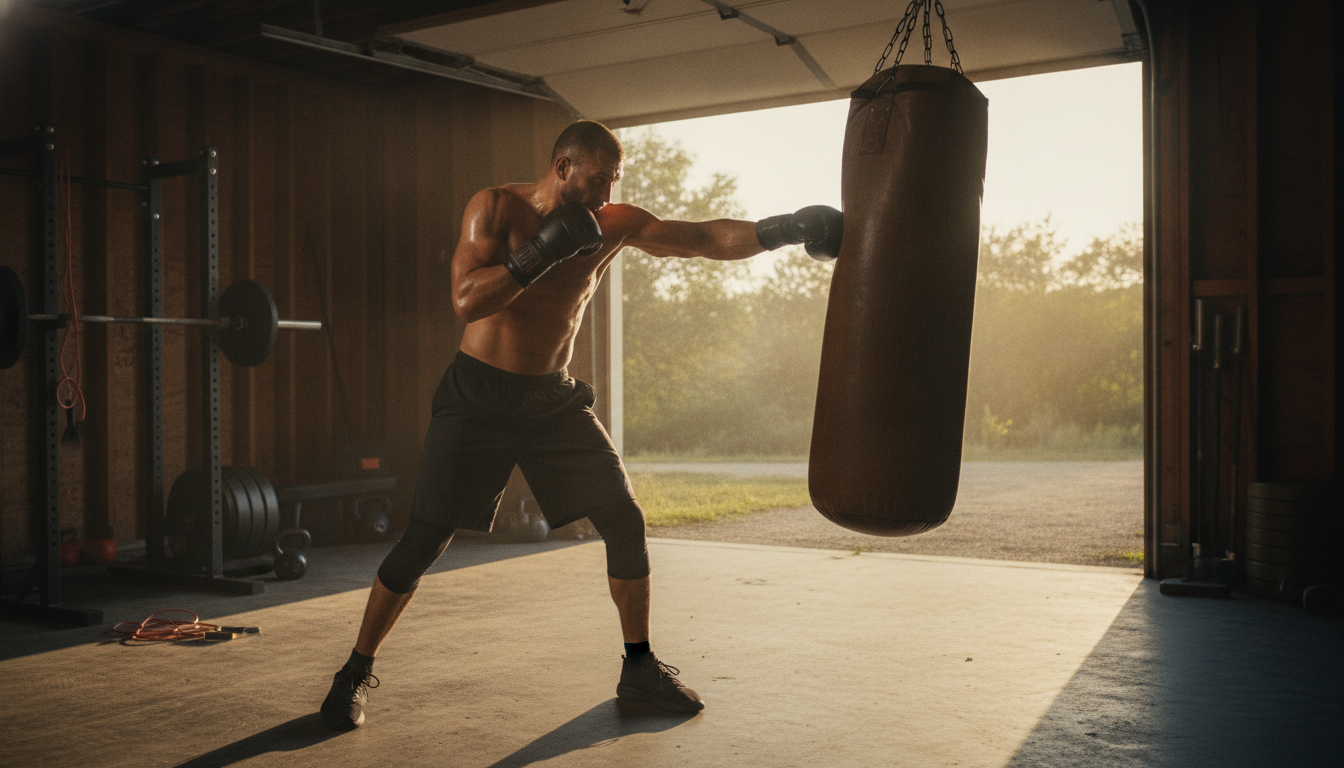
You hung a punching bag in the garage, put on gloves, and started hitting it. Ninety seconds later your shoulders were burning, your punches had turned into slaps, and you had no idea whether to stop, rest, or keep going until something told you to.
That is the normal first session, and it is not a fitness problem. It is a structure problem. Without a coach calling time, most beginners throw too hard, too fast, for too long, and spend the rest of the workout recovering. A beginner heavy bag workout needs three decisions made before you touch the bag: how long a round is, how long you rest, and what you are allowed to throw.
Use 2-minute rounds, not 3
Professional boxing uses 3-minute rounds with 1 minute of rest, and most bag workouts online copy that. For a beginner it is too long. The last minute of a 3-minute round is where technique falls apart: the hands drop, the feet stop moving, and you start pushing punches instead of snapping them.
Start with 2 minutes of work and 1 minute of rest. That is long enough to settle into a rhythm and short enough that your last punch still looks like your first. If 2 minutes is still a fight, use 90 seconds work and 60 seconds rest for the first week. Move to 3-minute rounds only when your final round looks as clean as your first one, which for most people takes four to six weeks of two or three sessions a week.
Keep the rest a full minute. Shortening rest is how you make the workout harder later. Early on, you need that minute to breathe and to think about the next round.
One combination per round
Flailing happens when you have no plan for the round, so give each round one job. Pick a single punch or combination and repeat it the whole round, with a step or a reset between each one:
- Jab (1): lead hand straight out and straight back.
- Jab, cross (1-2): the rear hand follows, hips turning.
- Jab, cross, lead hook (1-2-3): the hook comes from the hips, not the arm.
- Jab, cross, rear uppercut (1-2-6): bend the knees a little and drive up.
Throw at about 60 to 70 percent power. The bag does not need to swing a lot. If it is swinging hard, you are pushing instead of hitting and snapping back. After every combination, return your hands to your face. Getting into that habit now is the most valuable thing the bag can teach you.
A 6-round first session
This takes about 25 minutes with the warm-up. You need gloves, hand wraps if you have them, and a timer you can hear.
- Warm-up, 4 minutes. Jump rope or jog on the spot, then shadowbox with loose arms.
- Round 1, jab only. Move around the bag, two or three jabs at a time.
- Round 2, 1-2. Jab, cross, step out, reset.
- Round 3, 1-2-3. Slow down if the hook gets wild.
- Round 4, 1-2-6. Bend your knees for the uppercut. Do not lean forward.
- Round 5, free round. Mix any of the four, still at 70 percent.
- Round 6, fast hands. Light, quick 1-2s for the whole round. This is the only round where speed matters more than form.
- Cooldown, 3 minutes. Walk, loosen the shoulders, take the gloves off.
Rest 1 minute between every round. If round 6 is ugly, stop at five next time and build back up. A clean five beats a sloppy six.
Let a timer call the round
Without a coach, the timer is the coach. The rule that keeps beginners from gassing out is simple: the round ends when the bell rings, not when you feel tired, and the next one starts when the rest ends, not when you feel ready. A timer you have to look at does not work, because you will not be looking at it in the middle of a combination.
What helps is an audible warning about 10 seconds before the end of each round, so you can push the last few combinations instead of drifting, and a short prep countdown so you are in your stance when round one starts. In Peak Interval you can build this once, with a prep phase, six 2-minute rounds, 1-minute rests, and a spoken cue before each change, and add a short label to each round ("1-2-3", "fast hands") so you know what to throw without having to remember. With an Apple Watch, you get a wrist tap at each bell, which you will notice through gloves and over music.
Where to go from here
Run this session two or three times a week for the first month. Progress one thing at a time: first make the rounds longer (2:00, then 2:30, then 3:00), then add a seventh and eighth round, and only then cut the rest to 45 seconds. Add new combinations when the old ones are clean, not when they are boring.
The goal for a beginner is not to be exhausted after the bag. It is to finish the last round with your hands up and your punches still snapping. Short rounds, one job per round, and a timer that calls time will get you there faster than hitting hard until you can't.
Put a bell on your garage bag
Peak Interval lets you set round length, rest and a prep countdown, label each round with what to throw, and hear the bell from your iPhone or feel it on your Apple Watch.
Download Peak Interval