
HIIT and Aging: How Interval Training Can Slow the Aging Process
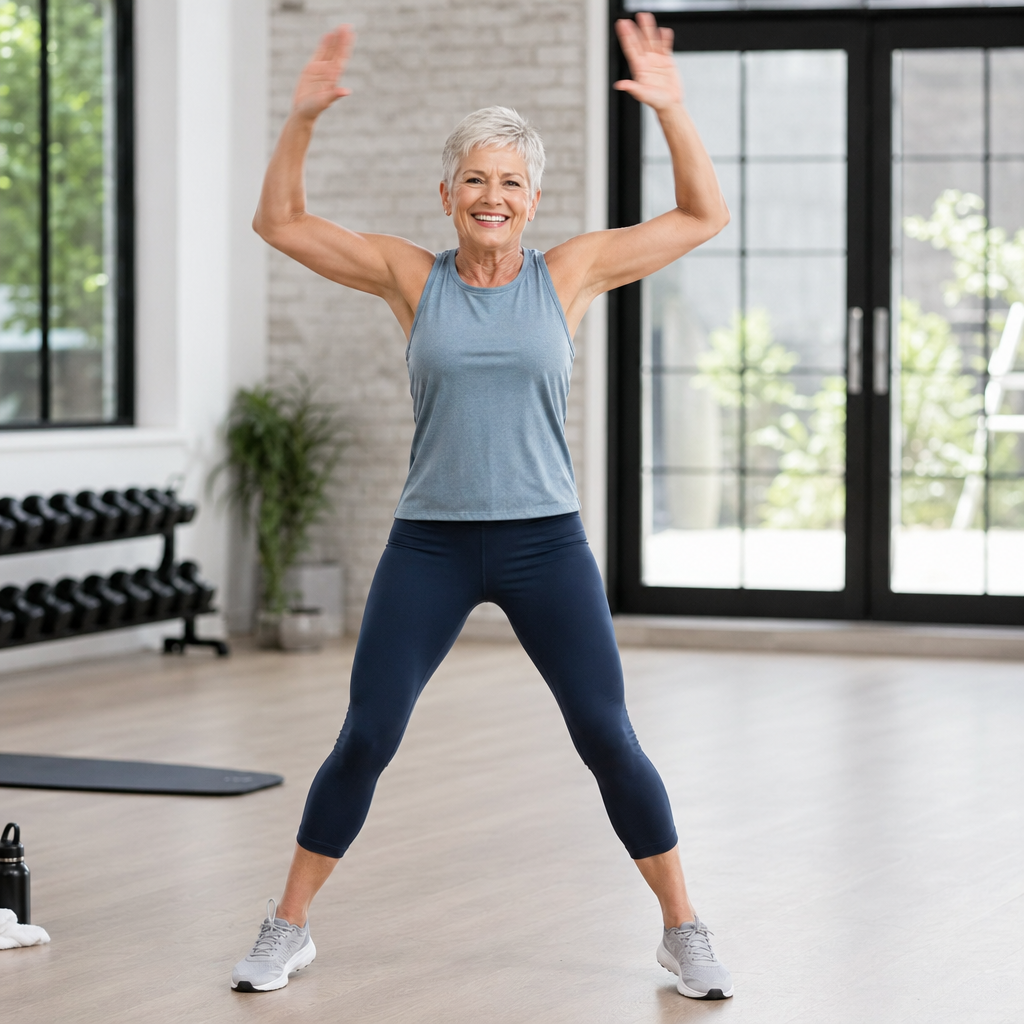
For most of human history, getting older meant getting weaker, slower, and more fragile in ways that seemed inevitable. The story you grew up with — that your VO2 max declines, your muscles wither, your bones thin, your brain slows, and there's not much to be done about any of it — was based on observing what happens to people who don't actively resist the process. What we've learned in the last two decades, particularly from the explosion of research on high-intensity interval training, is that much of what we used to call "normal aging" is actually disuse atrophy combined with declining metabolic capacity, both of which respond remarkably well to the right kind of training stimulus.
HIIT has emerged as one of the most powerful tools we have for slowing biological aging. Not because it's magic, but because it specifically targets the cellular machinery — mitochondrial function, hormonal signaling, neuromuscular recruitment, cardiovascular elasticity — that erodes most predictably with age. This post walks through the major aging-related systems that HIIT influences, what the research actually shows, and how to think about applying interval training across different decades of adult life.
Mitochondrial Decline and the HIIT Reversal
Inside every one of your cells, mitochondria produce the energy that powers everything from muscle contraction to immune function to thought itself. As you age, mitochondrial number, density, and function all tend to decline. Mitochondria become less efficient at producing energy, accumulate damage, and generate more reactive oxygen species (the "free radicals" that contribute to cellular aging). This mitochondrial decline is now considered one of the central mechanisms of aging itself, and it's a major reason why energy levels, exercise capacity, and recovery all tend to deteriorate with age.
What's striking is how dramatically HIIT reverses this trend. Research from the Mayo Clinic published in 2017 made waves by demonstrating that HIIT in older adults produced changes in mitochondrial gene expression that essentially reversed the typical aging signature. The study compared HIIT, resistance training, and combined training in younger and older adults, and the older HIIT group showed mitochondrial improvements far greater than the older resistance-training group, in some cases matching the gene expression patterns of much younger people.
The mechanism appears to involve mitochondrial biogenesis — the creation of new mitochondria — as well as improvements in the function of existing ones. The brief, intense bouts of work characteristic of HIIT signal cells that they need more energy-production capacity, and the body responds by building it. This effect doesn't seem to plateau with age in the way many other adaptations do; even adults in their seventies and beyond show meaningful mitochondrial improvements with consistent HIIT training.
Cardiovascular Aging and VO2 Max
Maximum oxygen uptake (VO2 max) is one of the most reliable predictors of all-cause mortality across the lifespan. People with higher VO2 max live longer, on average, and stay independent longer. The bad news is that VO2 max declines with age — typically about ten percent per decade after thirty in untrained adults. The better news is that this decline is largely a function of training status, not biological age. Trained older adults routinely have VO2 max values that exceed sedentary adults thirty or forty years younger.
HIIT is among the most efficient interventions available for improving VO2 max. Studies consistently show that interval training produces VO2 max improvements at least as large as longer-duration moderate exercise, in much less time. For older adults specifically, this efficiency matters enormously. The total time investment of two to three short HIIT sessions per week is sustainable in a way that hours of moderate cardio often isn't, and the cardiovascular adaptations produced include improvements in stroke volume (the amount of blood pumped per heartbeat), arterial elasticity, and microvascular function.
The improvements in arterial elasticity are particularly important for healthy aging. Arteries become stiffer with age, contributing to elevated blood pressure and increased cardiovascular risk. Regular HIIT has been shown to improve arterial compliance even in older adults, partially restoring the cardiovascular function of younger years. This isn't a small effect — it has real implications for cardiovascular event risk, blood pressure regulation, and overall longevity.
Sarcopenia and Muscle Preservation
After about age thirty-five, untrained adults lose roughly one to two percent of muscle mass per year, with that rate accelerating significantly after sixty. This loss, called sarcopenia, is one of the most consequential aspects of aging because muscle does so much more than enable movement — it serves as a metabolic reservoir, a glucose sink that supports insulin sensitivity, and a literal physical buffer that prevents falls and fractures.
While dedicated resistance training is the gold standard for muscle preservation, HIIT also contributes meaningfully, particularly when it incorporates resistance elements like weighted carries, kettlebell movements, sled pushes, or bodyweight strength work. The high-intensity nature of HIIT recruits fast-twitch muscle fibers — the ones that atrophy preferentially with age — and provides a stimulus for them to be maintained or developed. Pure cardiovascular HIIT (sprints, cycling intervals) supports muscle preservation less directly but still contributes through the broader hormonal environment it creates and the demand it places on the neuromuscular system.
The most powerful approach for older adults is typically a combination: resistance training two to three times per week for direct muscle stimulus, plus HIIT one to two times per week for cardiovascular and mitochondrial benefits. This combination addresses the major dimensions of physical aging more completely than either modality alone.
Brain Aging and Cognitive Function
The aging brain shrinks. Specific regions, particularly the hippocampus (critical for memory) and the prefrontal cortex (critical for executive function), tend to lose volume with age. Cognitive performance — processing speed, working memory, learning new information — declines along similar trajectories. These changes contribute to the increased risk of dementia and Alzheimer's disease in later life.
Exercise in general supports brain health, but HIIT specifically appears to offer some unique benefits. The brain-derived neurotrophic factor (BDNF) response to exercise — which supports neuron growth, synaptic plasticity, and cognitive resilience — is dose-responsive to intensity. Higher-intensity exercise produces larger BDNF surges, and chronic HIIT training has been associated with measurably higher baseline BDNF levels.
Cardiovascular fitness, which HIIT improves so efficiently, is also strongly correlated with hippocampal volume and cognitive function across the lifespan. The brain needs robust blood flow to function well, and the cardiovascular adaptations from interval training translate directly to better cerebral perfusion. Studies of older adults have repeatedly shown that those who maintain higher fitness levels show less age-related cognitive decline and lower dementia risk than their sedentary peers.
The catecholamine and dopamine responses to high-intensity work also have acute effects on mood, motivation, and mental sharpness. Many older adults who adopt HIIT report cognitive benefits that show up within weeks — sharper thinking, better mood, more energy, improved memory of details. These acute effects compound over time into the longer-term structural and functional brain benefits.
Make Every HIIT Session Count, At Any Age
Whether you're forty or seventy, what matters most is consistent, well-structured intervals that match your fitness level. Peak Interval gives you customizable timer controls and saved workouts so you can build a sustainable HIIT practice that supports healthy aging for decades.
Download Peak IntervalTelomeres, Cellular Aging, and Long-Term Health
At the ends of every chromosome in your body sit telomeres — protective sequences of DNA that shorten each time a cell divides. When telomeres get critically short, cells stop dividing or die. Telomere length is one of the most studied biological markers of cellular aging, and shorter telomeres are associated with increased risk of age-related diseases.
Research suggests that exercise, including HIIT, supports telomere maintenance through several mechanisms — increased activity of telomerase (the enzyme that maintains telomere length), reduced oxidative stress, and improved cellular metabolism. While the data on HIIT specifically and telomere length is still developing, the broader picture from exercise research suggests that physically active people tend to have telomere lengths consistent with chronologically younger sedentary people. The biological aging difference can be measured in years.
This isn't a reason to obsess over telomere length specifically — it's one piece of a much larger puzzle of cellular aging — but it's part of why exercise has such broad effects on healthspan rather than just lifespan. The same training that supports your cardiovascular system, your mitochondria, your muscles, and your brain also supports the cellular machinery that determines how well your body maintains itself at every level.
Insulin Sensitivity, Glucose Control, and Metabolic Aging
Insulin resistance and impaired glucose control are among the most reliable changes that come with aging in industrialized populations. By age sixty-five, roughly half of adults in the United States have prediabetes or type 2 diabetes, conditions that dramatically increase the risk of cardiovascular disease, dementia, kidney disease, and many other age-related problems.
HIIT is particularly effective at improving insulin sensitivity, often producing meaningful improvements within four to eight weeks of consistent training. The mechanism involves rapid depletion of muscle glycogen during high-intensity work, which signals muscles to upregulate the glucose transporters that move glucose out of the bloodstream. Mitochondrial improvements from HIIT also support more efficient glucose oxidation. Together, these changes mean your body handles carbohydrates better at any age, but the benefit is especially pronounced in older adults whose insulin sensitivity has declined.
For people with prediabetes or type 2 diabetes, HIIT has become one of the most frequently studied non-pharmacological interventions, with consistent evidence of improvements in fasting glucose, post-meal glucose excursions, hemoglobin A1c, and insulin sensitivity. These improvements are clinically meaningful — they translate to reduced medication needs, lower complication risk, and better long-term health outcomes.
Practical Considerations Across the Decades
The application of HIIT shifts subtly across different life stages, and understanding these shifts helps you build a practice that supports rather than undermines your aging trajectory.
In your thirties and forties, the focus is typically on building a robust foundation while life pulls you in many directions. HIIT's efficiency makes it ideal for this stage — two to three short sessions per week can maintain and build fitness even when time is constrained. This is also the stage where building good recovery habits, particularly sleep and nutrition, pays the largest dividends for the decades ahead.
In your fifties, recovery typically slows somewhat, and the importance of careful programming increases. The same total training volume that worked at forty often needs adjustment. Many people in this decade benefit from slightly fewer HIIT sessions per week, more deliberate recovery between sessions, and increased attention to mobility and movement quality. This is also when the combination of HIIT and resistance training becomes particularly valuable, as muscle preservation requires more deliberate effort.
In your sixties and beyond, individual variation in capacity becomes much larger, and the right approach depends heavily on your training history, current fitness, and any health considerations. Some sixty-year-olds train as hard as they did in their thirties; others are starting from a much lower baseline. The key principles remain the same — push hard during work intervals, recover well between them, prioritize consistency over volume — but the specific implementation needs to match your body's capacity. Modified movements, longer recovery periods within sessions, and reduced session frequency are all reasonable adjustments. The fitness gains and health benefits remain available; they just may require more thoughtful programming.
For adults who are starting HIIT later in life, a medical clearance is reasonable, especially if you have any history of cardiovascular issues, joint problems, or other health concerns. Once cleared, the principle of starting conservatively and building gradually applies even more strongly than for younger adults. The good news is that improvements come quickly when you're starting from low fitness, and the early returns on consistent training are often dramatic.
Final Thoughts
The story of aging is being rewritten in real time. The decline that previous generations accepted as inevitable is increasingly understood as a combination of biological aging plus the effects of disuse, both of which are far more modifiable than we realized. HIIT, when applied intelligently, addresses many of the central mechanisms of aging — mitochondrial decline, cardiovascular stiffening, muscle loss, cognitive degradation, metabolic dysfunction — more efficiently than almost any other intervention available.
This doesn't mean HIIT will make you immortal or freeze biological time. It means that by training intelligently, you can dramatically extend the years of your life in which you remain capable, energetic, mentally sharp, and independent. That's the goal worth pursuing. The compound interest of consistent, well-structured high-intensity training compounds over decades, and the version of you in your seventies and eighties will thank the version of you reading this article today for taking the practice seriously.