
Long-Term HIIT: Stories from People Who've Been Doing It for Years
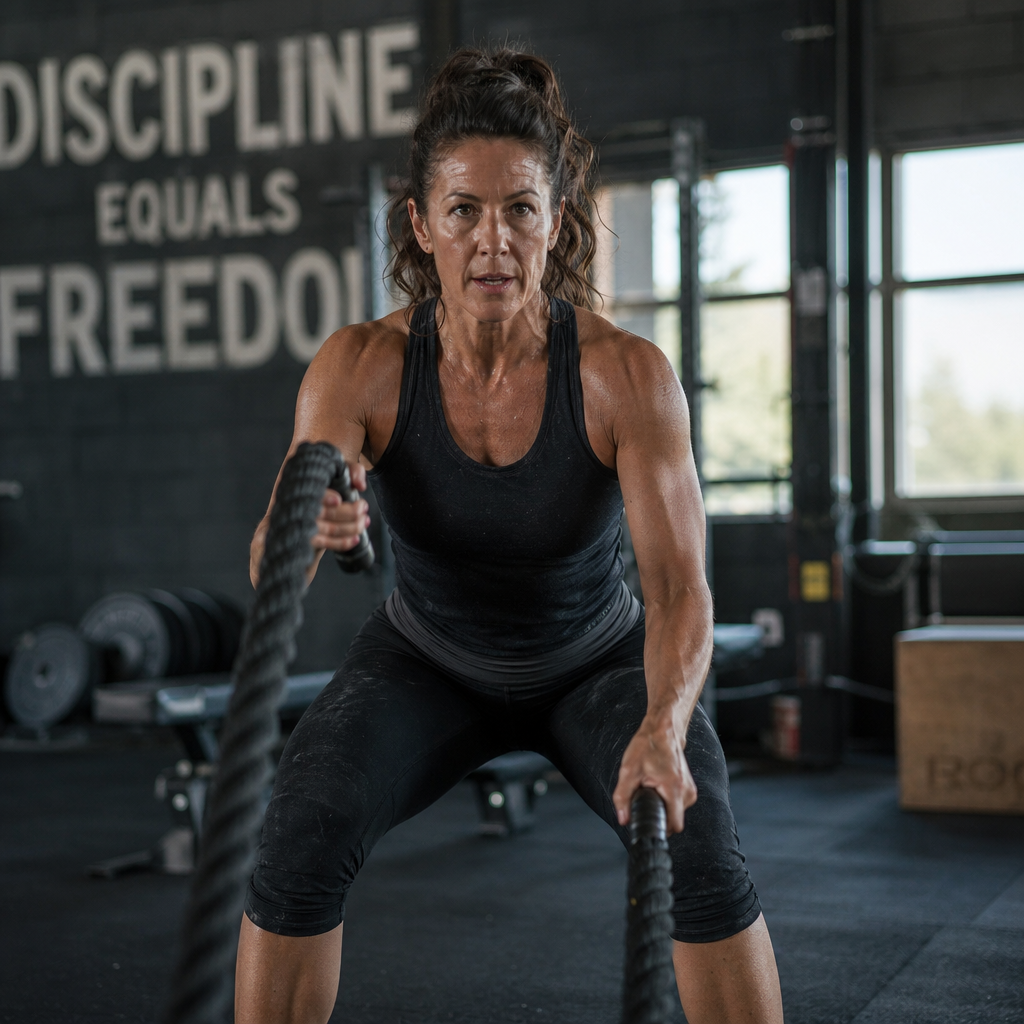
The fitness industry sells transformation. Six-week programs, twelve-week challenges, ninety-day plans — all of them implicitly suggesting that the meaningful version of training happens in dramatic short bursts followed by a finished result. What this framing misses is the much more interesting and ultimately more useful version of fitness: the practice that persists for years, becomes integrated into the texture of someone's life, and shapes who they are over the long arc of decades.
The people who have been doing HIIT for ten, fifteen, or twenty years have something to teach the rest of us that no transformation story can match. Not because they look more dramatic than the before-and-after photos — often they don't, having long since plateaued at whatever physical version of themselves they were going to become — but because they've learned what actually works for sustained practice. They've watched themselves and others succeed and fail, build and burn out, find sustainable rhythms and discover unsustainable ones. The patterns from this longer view are often the opposite of what the transformation industry implies.
This post collects observations from people who have made HIIT a decades-long practice. The stories themselves are less important than the patterns underneath them — the things that consistently distinguish sustainable practice from the kind that fades, that show up across very different individuals with very different starting points and goals.
What Doesn't Change Across Years
A surprising number of things stay constant across long-term HIIT practice, despite the inevitable evolution that comes with aging, life changes, and accumulated training experience.
The fundamental physiological response to high-intensity intervals doesn't change. Twenty seconds of maximum effort followed by ten seconds of rest still produces the same kind of metabolic stress, hormonal cascade, and adaptive signal in someone's twenty-fifth year of training as it did in their first. The mechanics of HIIT are deeply consistent — your body still responds to brief intense work with the same cardiovascular adaptations, the same insulin sensitivity improvements, the same mitochondrial benefits. The principles work in the same ways across decades.
The mental character of HIIT also stays consistent. The discomfort during work intervals, the relief during rest, the sense of accomplishment after — these don't fade with experience. Long-term practitioners often describe their relationship with the difficulty of HIIT in similar terms to relatively new ones: it's hard, it's supposed to be hard, and the satisfaction of finishing is genuine regardless of how many times you've done it.
The need for variety to prevent staleness is also persistent. Even practitioners with twenty years of experience need to rotate formats, adjust stimuli, and keep the work fresh. Doing the exact same workout repeatedly for years rarely sustains anyone, regardless of experience level.
What Changes Substantially
Many other things shift in important ways as practice extends over years.
Recovery requirements increase. The same HIIT session that was easily absorbed at twenty-five often requires more deliberate recovery at forty. This isn't a sign of decline so much as an honest acknowledgment that bodies need more support as they age. Long-term practitioners almost universally develop more sophisticated recovery practices — better sleep habits, more attention to nutrition, regular mobility work, periodic massage or bodywork. The recovery isn't separate from the training; it's part of it.
Programming becomes more deliberate. Newer practitioners can often improvise their training and still progress. Long-term practitioners typically need more structure to keep making progress and to avoid the accumulating effects of poor programming. Periodization, deload weeks, intentional variety, and balanced programming across modalities become more important rather than less.
Goals shift away from peak performance. Many people who started HIIT pursuing aggressive aesthetic or performance goals find that those goals fade in importance over time. By their tenth year of practice, they're often less concerned with maximum effort or peak fitness and more concerned with sustainable health, energy, mood, and the simple pleasure of having a body that works well. The training continues; the meaning of it shifts.
Integration with life becomes the priority. Newer practitioners often build their lives around their training. Long-term practitioners almost universally build their training around their lives. The session that fits between work obligations and family time consistently for years matters more than the optimal program that requires reorganizing life to accommodate it.
Injuries and tweaks accumulate, requiring adaptation. Few people make it twenty years of training without picking up some accumulated wear and tear — knees that don't tolerate certain loading patterns, shoulders that need warmup before pressing work, lower backs that demand particular movement quality. Long-term practitioners learn to work with these realities rather than fighting them, adjusting their training to support their bodies rather than insisting their bodies match their idealized programs.
The Compounding Effect
One of the most remarkable things about long-term HIIT practice is how the benefits compound in ways that short-term programs can never match. The cardiovascular fitness built over years becomes a foundation that supports everything else — energy levels, cognitive function, mood, the capacity to engage with life. The metabolic health built over decades shows up in lab work that's increasingly distinct from same-age non-exercising peers. The mental discipline cultivated through repeated voluntary engagement with difficulty transfers to other domains in ways that are hard to articulate but that show up consistently in long-term practitioners' lives.
Many veterans describe their HIIT practice as one of the most reliable sources of stability in their lives. Through career changes, family transitions, relationship shifts, and the accumulating losses that come with age, the training has remained a constant. The regular rhythm of work and recovery, the predictable physiological response to intense intervals, the satisfaction of having shown up — all of this provides a structure that other parts of life often lack.
The mental health benefits are particularly striking over decades. Long-term practitioners often describe their training as their most reliable antidepressant, anxiolytic, and stress-management tool. The acute effects on mood and stress that show up after individual sessions accumulate into a baseline state of greater equanimity over years. Many describe their post-training mental state as essential to their functioning in ways that nothing else replaces.
Build a Practice That Lasts Decades
The training that compounds over years is the training you actually do consistently. Peak Interval helps you build sustainable habits with reliable interval timing, saved workouts you can return to for years, and a clean interface that doesn't get in the way of just showing up.
Download Peak IntervalCommon Patterns Among Long-Term Practitioners
Looking across people who've sustained HIIT for fifteen or more years, certain patterns show up repeatedly.
They've found their version, not the version. Long-term practitioners almost universally have a specific approach to HIIT that fits them — particular formats they prefer, particular schedules that work, particular environments that support their practice. They've stopped trying to do HIIT the way someone else does it and have settled into their own version. This individualization seems to be essential to sustainability.
They've made peace with imperfect consistency. Nobody trains perfectly for fifteen years. Long-term practitioners have all had periods of reduced training due to injuries, life events, illnesses, or just life getting in the way. What distinguishes them isn't perfect consistency; it's an ability to return to training after disruptions without dramatic restart-fatigue cycles. They've developed what might be called training resilience — the practice survives the disruptions rather than collapsing during them.
They've largely stopped chasing optimization. Newer practitioners often spend significant energy looking for the optimal program, the optimal nutrition strategy, the optimal supplements, the optimal everything. Long-term practitioners have generally landed on patterns that work well enough and stopped fiddling with them. The cost of constant optimization — in attention, in disrupted habits, in the stress of always wondering if they're doing the right thing — has come to outweigh the marginal benefits.
They've integrated training with relationships. Many long-term practitioners have specific people they train with, talk to about training, or share milestones with. The social dimension of training — even when most sessions are solo — provides accountability and meaning that pure individual practice often lacks.
They've developed their own internal coaching voice. After years of paying attention to how their bodies respond to different inputs, long-term practitioners typically have a sophisticated internal sense of when to push and when to back off. They don't need an external program to tell them what to do; they've developed the ability to listen to themselves accurately.
The Aging Consideration
A particular advantage of having been at HIIT for many years is the accumulated capacity that supports aging well. The fifty-year-old who's been training intelligently since their thirties has a fundamentally different physical baseline than a same-age person who's just starting. The mitochondrial density, the cardiovascular capacity, the muscle mass, the bone density, the neuromuscular coordination — all of it has been built up over years and provides a foundation that the body can draw on as the inevitable aging-related changes begin.
This isn't to say that starting later doesn't work. The research on starting HIIT in middle age and beyond is consistently encouraging. But starting earlier and continuing builds reserves that pay dividends decades later. Many long-term practitioners describe their seventh or eighth decade of life with a vitality their parents and grandparents didn't have at the same ages. The continuity of practice across decades is part of what creates that difference.
What this looks like practically is that the work of long-term practitioners increasingly becomes about preservation and intelligent adaptation rather than building. The training that worked at thirty-five may need adjustment at sixty — different recovery protocols, different exercise selections, different intensity guidelines, different volumes — but the core practice continues. Many of the most inspiring long-term practitioners are people in their sixties and seventies whose HIIT looks somewhat different from what they did at forty but who are still pushing genuine intensity and getting genuine benefits.
Lessons for Earlier-Career Practitioners
If you're earlier in your HIIT journey, the patterns from long-term practitioners offer useful guidance.
Don't try to do it all in the first year. The training adaptations that compound over decades don't happen any faster than they happen. The newer practitioner trying to compress what should be a long arc into a few months tends to overtrain, get injured, or burn out. Patience isn't just nice; it's essential to sustainable practice.
Build the habits before refining the details. Showing up consistently for years matters more than any specific program optimization. Build the habit of regular HIIT first — three sessions a week for a year, with whatever programming is easy to maintain — and worry about optimization only after the habit is solid.
Pay attention to recovery from the start. The recovery practices that long-term practitioners eventually develop are easier to install as habits early than to retrofit later. Sleep, nutrition, hydration, mobility, stress management — these are the foundations that determine how much training your body can absorb over years.
Develop your own ability to read your body. The internal coaching voice that long-term practitioners have isn't innate; it's developed through paying attention. Start paying attention now to how different sessions affect your sleep, your energy, your mood, your performance the next day. Over years, this attention becomes a skill that lets you train more intelligently than any external program could.
Don't optimize for peak; optimize for sustainability. The practice that lasts decades isn't the most impressive single workout you can do — it's the rhythm you can maintain through career changes, family transitions, injuries, and aging. Choose programming that you can imagine continuing for years, not just for the next training block.
Final Thoughts
The story of long-term HIIT practice is less dramatic than the transformation stories that fill social media, but it's ultimately more useful. The body and life built through decades of consistent practice can't be replicated in a few months of intense effort. What makes the difference is showing up — through the periods when motivation is high and through the periods when it isn't, through the times when training is going well and through the times when it's a struggle, through the years when you're getting fitter and through the years when you're just maintaining.
Most of the long-term practitioners we know would tell you that they're not particularly talented or disciplined. They've just kept doing it. Whatever variation has gone into their training over the years, the underlying constant has been continued practice. The fitness, health, and life benefits they've accumulated are the result of that simple persistence over a long enough timeframe to compound.
If you're newer to HIIT, the most useful thing you can do isn't to find the optimal program or the most efficient protocol. It's to find a sustainable version of practice that you can imagine continuing for the next ten years. Start there. Refine over time. Decades from now, you'll have built something that no short-term program could ever match.