Peak Interval vs Gymboss: A Clip-On Interval Timer Versus a Phone and Watch App
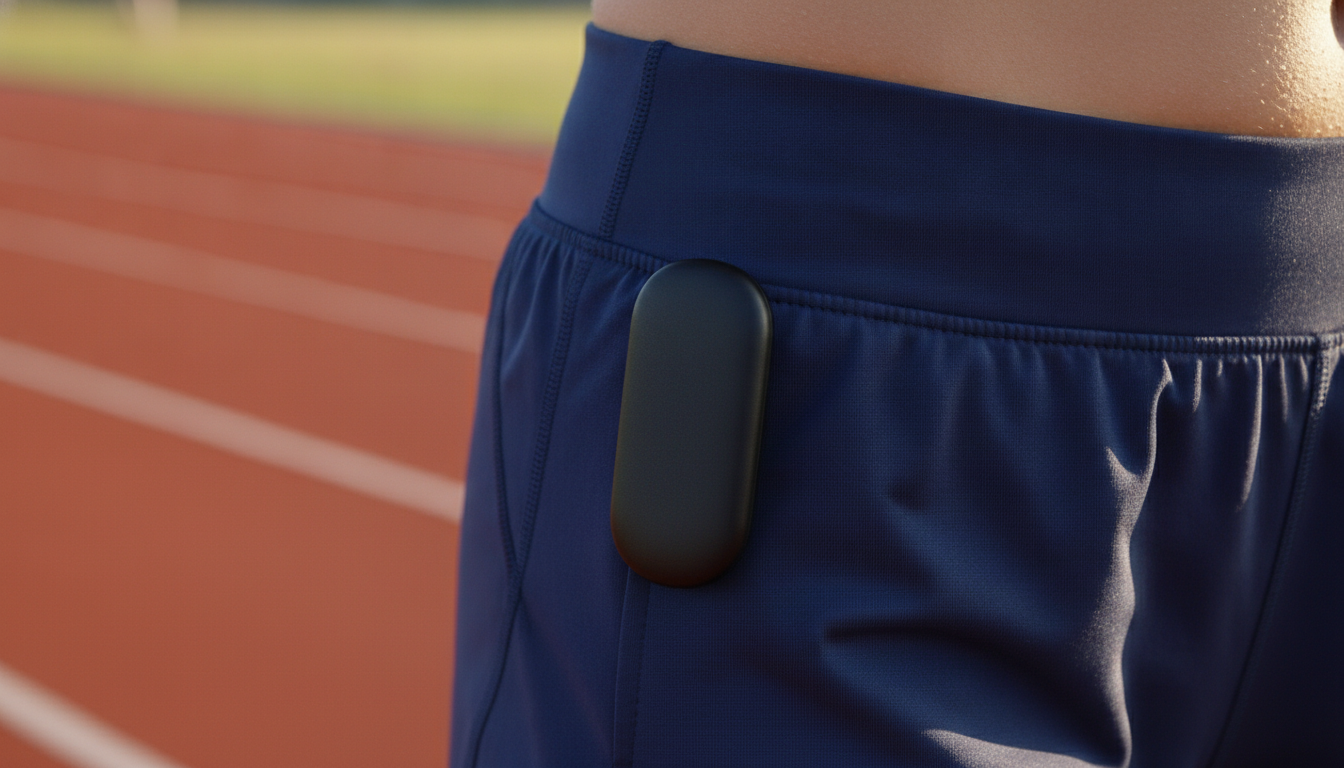
The Gymboss is the timer a lot of people started with: a small box clipped to your waistband that beeps and vibrates when an interval ends. It does not need your phone, it runs on one AAA battery, and you never wonder if a notification will stop it halfway through a round.
That simplicity is why people still search for it, and it is also why some outgrow it. The question here is not which timer is better in general. It is whether your workouts still fit inside a device built around one or two intervals, or whether you have reached the point where a phone and Watch app earns its place.
What a Gymboss actually does
The Classic, Plus and Charge models all work the same way. You set one or two intervals, each anywhere from 2 seconds to 99 minutes, and a repeat count of up to 99. A 20/10 Tabata is 20 seconds, 10 seconds, 8 repeats. A 40/20 circuit is 40 seconds, 20 seconds, however many rounds you want. At each change it beeps, vibrates, or does both, for 1 to 9 seconds.
The miniMAX goes further. It holds up to 25 intervals in a program and stores several programs, so you can build a 5-minute warm-up, a work block and a cooldown in one sequence. Every model also has a stopwatch and a clock, and all of them are built to survive sweat and being dropped.
What it does not have is a way to see the shape of the workout. You program it with a few buttons on a small LCD, and reviewers of the miniMAX say outright that setting up a saved program is not intuitive. The intervals have no names, so the box knows it is on interval 3 of 7 but cannot tell you that interval 3 is burpees.
What Peak Interval adds
Peak Interval does the same core job on the iPhone and Apple Watch you already own, with no limit on how many blocks a workout has. You build it from phases — prep, work, rest, cooldown — nest repeated sets inside blocks, name each phase, and save it. A ladder of 30, 40 and 50 seconds with different rests, or six exercises at 45/15 for three rounds with a 2-minute break between rounds, takes a minute to set up on a full screen instead of a dozen button presses.
On the Watch you get the thing that made the Gymboss popular, a buzz on your body at each change, along with the phase name and time left at a glance. Each phase gets its own sound and haptic cue, so you can tell work from rest without looking down. Leave the phone in your bag and the Watch runs the session on its own.
The trade-off is battery and dependence on a device that does a hundred other things. A Gymboss lasts months on one AAA battery. A Watch running a 30-minute session uses a slice of a charge you also need for the rest of the day.
Who should keep the clip
Keep the Gymboss if your training is the same two intervals every time — Tabata, run/walk, 1-minute rounds on the heavy bag — and you value never having to look at a screen. It is also the better pick if you do not wear a smartwatch and do not want your phone on you, or if you are coaching a class and want one cheap timer per person.
Pick Peak Interval if your sessions have more than two kinds of interval, if you are tired of reprogramming the box every time you change workouts, or if you already wear an Apple Watch and want one less thing to clip on and keep a battery in. Saved, named workouts are the biggest difference: you set up a session once and start it the same way every time.
Using both is reasonable. Plenty of people keep a Gymboss in the gym bag for a quick Tabata and use an app for longer structured sessions.
The short version
A Gymboss is a very good answer to "beep me every 20 and 10 seconds," and nothing on a phone beats it for simplicity or battery life. Once your workouts have names, more than two blocks and rest that changes between rounds, you are fighting its buttons. That is where a saved workout on your wrist with a cue for every phase takes over.
Outgrown two intervals?
Peak Interval saves multi-phase workouts and cues every transition with sound and haptics on iPhone and Apple Watch.
Download Peak Interval