Postpartum HIIT: Safe Return to Intensity After Childbirth
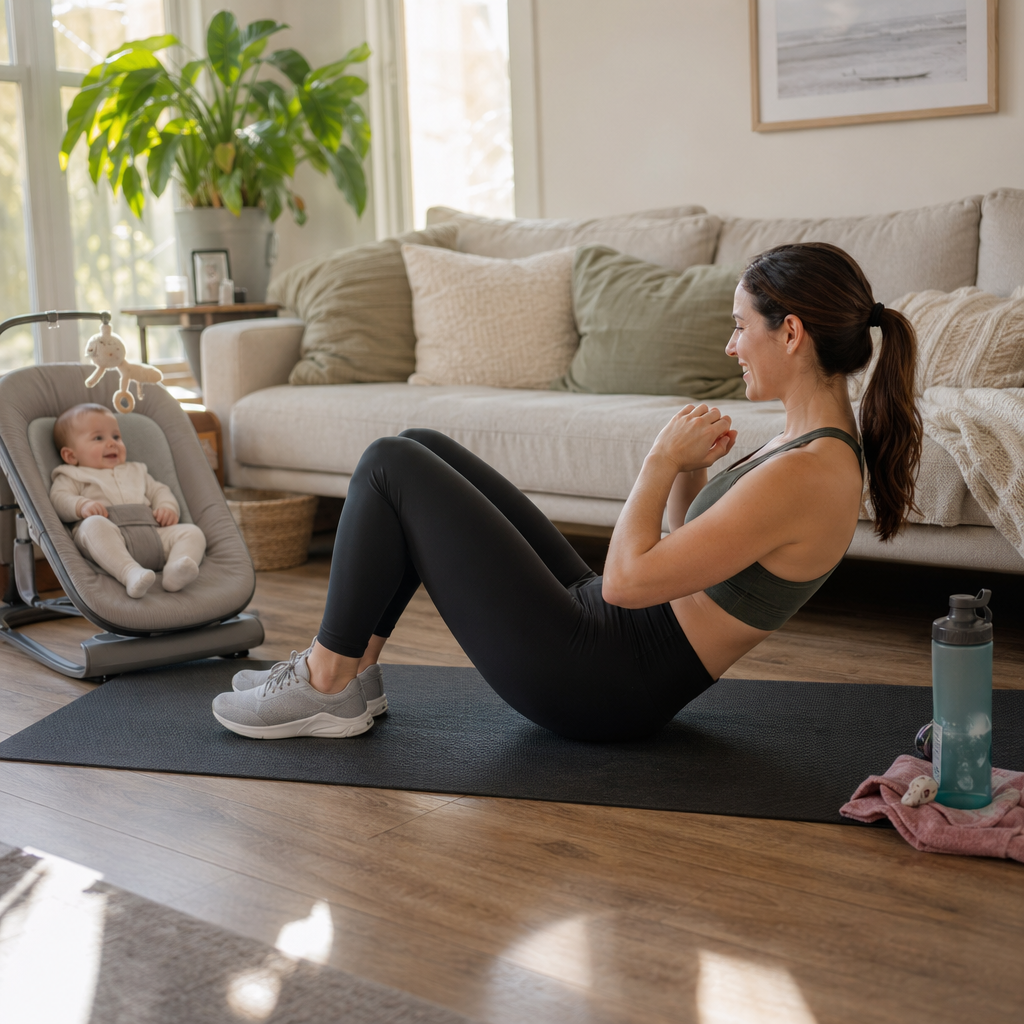
The transition back into high-intensity training after childbirth is one of the most physically and emotionally complex parts of postpartum life, and unfortunately, it's an area where the popular fitness culture has historically given terrible advice. The narrative of "bouncing back" — racing to recover your pre-pregnancy body within weeks of delivery — has caused real harm to women who pushed too hard too soon and ended up with pelvic floor dysfunction, diastasis recti complications, persistent injuries, and a difficult relationship with their bodies that took years to repair.
The honest truth is that childbirth, whether vaginal or cesarean, is a major physiological event. Your body has spent nine months adapting to a growing baby, your hormones have just shifted dramatically, your core and pelvic floor have undergone significant changes, and you're likely operating on disrupted sleep with the demands of caring for a newborn layered on top. Returning to HIIT in this context isn't about toughness or willpower — it's about respecting what your body has just done and giving it the time and progressive loading it needs to safely handle intensity again.
This post walks through what actually happens to your body during pregnancy and childbirth that affects HIIT readiness, the realistic timeline for safe return to intensity, the specific issues that need attention before you start, and how to structure a progressive return that supports rather than undermines your long-term health.
What Pregnancy Does to Your Body That Matters for HIIT
Several major changes during pregnancy directly affect your readiness for high-intensity training afterward, and understanding them helps explain why patient progression matters so much.
Your abdominal wall stretches significantly to accommodate the growing baby, and the linea alba — the connective tissue that joins the two sides of your rectus abdominis — typically widens during pregnancy. In some women, this widening persists postpartum as diastasis recti, which is essentially a gap between the two sides of the abdominal muscles. Diastasis is extremely common (some research suggests well over half of women have some degree of it after childbirth) and isn't necessarily a problem, but it does affect how your core handles load. Activities that create high intra-abdominal pressure — including many HIIT movements — can worsen unhealed diastasis if added too soon.
Your pelvic floor — the network of muscles, ligaments, and connective tissue that supports your pelvic organs — has undergone significant change. During pregnancy, the increasing weight of the uterus places sustained downward pressure on these structures. During vaginal delivery, the pelvic floor stretches dramatically and may experience tearing or surgical intervention. Even with a cesarean delivery, the months of pregnancy still affect pelvic floor function. Many postpartum women experience some degree of pelvic floor dysfunction — incontinence, prolapse symptoms, pain — that needs attention before high-impact intense training is safe.
Hormonal changes during and after pregnancy affect joint laxity, primarily through the hormone relaxin. Relaxin levels remain elevated for several months postpartum, and even longer for breastfeeding mothers, contributing to looser ligaments throughout the body. This can make joints more vulnerable to injury during high-impact or rapid-direction-change movements that are common in HIIT.
Cardiovascular changes during pregnancy are profound — blood volume increases significantly, resting heart rate elevates, and various adaptations support the demands of sustaining a pregnancy. These changes reverse postpartum but not instantaneously. Your aerobic baseline returns over weeks and months, not days.
If you had a cesarean delivery, you're also recovering from major abdominal surgery. The healing of the incision, the underlying fascia, and the overall abdominal wall takes longer than the visible scar might suggest. Resuming intense training too soon after a C-section can compromise that healing.
The Realistic Timeline
Forget the social media images of women back to intense training six weeks postpartum. For most women, the realistic timeline for genuine return to HIIT — meaningful interval work at near-maximal effort, including jumping, sprinting, and high-impact movements — is meaningfully longer than the six-week postpartum check often suggests.
The six-week check is primarily about acute medical issues — incision healing for C-sections, basic recovery from delivery, ruling out postpartum complications. It's not a comprehensive assessment of musculoskeletal readiness for intense training. Many providers, when asked about exercise, give a generic green light at six weeks because patients have been waiting for that permission, but this is rarely based on detailed evaluation of core integrity, pelvic floor function, or readiness for impact.
A more honest framework for return to intensity looks like this:
Weeks 0 to 6: Focus on healing, sleep when possible, basic walking, and gentle reconnection with your breath and core. This isn't a training period; it's a recovery period. The most useful exercise activity in this window is walking — start small, build gradually, and let your body recover.
Weeks 6 to 12: Begin formal rehabilitation work, ideally with guidance from a pelvic floor physical therapist (more on this below). Focus on rebuilding core control, pelvic floor function, and basic strength. Progress to longer walks, gentle bodyweight exercises, and initial light cardiovascular work like stationary cycling. This is preparation for HIIT, not HIIT itself.
Weeks 12 to 16: Begin gentle interval-style work using low-impact modalities — cycling intervals, rowing intervals, swimming intervals if you have access. Keep intensity meaningfully below maximum and focus on your body's response. Continue rehabilitation work for core and pelvic floor.
Weeks 16 to 24: For women whose recovery is progressing well, this is when more traditional HIIT formats become reasonable — though typically still with modifications. Avoid high-impact movements (jumping, running) until you've assessed pelvic floor readiness. Continue building gradually.
Beyond 24 weeks: Most women who have followed a thoughtful progression can resume largely unrestricted HIIT by six months postpartum, though some specific accommodations may persist longer based on individual recovery.
These ranges are guidelines, not hard rules. Some women progress faster, particularly those who maintained significant fitness through pregnancy and had uncomplicated deliveries. Others, especially those recovering from difficult deliveries, complications, or who had limited fitness pre-pregnancy, may need significantly longer. Breastfeeding adds its own considerations around joint laxity and energy availability that can extend the timeline.
The Pelvic Floor Question
If there's one piece of advice that matters more than any other for safe postpartum return to HIIT, it's this: see a pelvic floor physical therapist. This isn't a luxury intervention or a precaution only for women experiencing obvious symptoms. It's a foundational part of postpartum care that has been woefully under-prescribed in much of the world but is increasingly recognized as essential.
A qualified pelvic floor PT can assess the current state of your pelvic floor function, identify issues you may not be aware of (including pelvic floor weakness, hypertonicity, prolapse, or coordination problems), guide you through specific rehabilitation exercises, and help you understand when and how to progress to higher-impact training. In many countries, pelvic floor physical therapy is a standard part of postpartum care; in the United States and some others, women often have to seek it out themselves, but it's worth the effort.
Signs that strongly suggest you need pelvic floor PT before resuming HIIT include any urinary incontinence (leaking when you laugh, cough, sneeze, run, or jump), feelings of pelvic heaviness or pressure, pain during intercourse, persistent low back pain, or visible diastasis recti. These aren't problems to push through — they're signals from your body that intense training isn't yet appropriate, and addressing them now prevents much more significant problems later.
Build Back Gradually With Customizable Intervals
Returning to HIIT postpartum requires meeting your body where it is. Peak Interval lets you customize work and rest periods precisely, so you can start with longer rest and shorter work as you rebuild, then progress at your own pace.
Download Peak IntervalCore Reconnection Before Intensity
Even women who are eager to get back to training benefit enormously from a focused core reconnection phase before adding intensity. The core that supported you before pregnancy needs to be deliberately rebuilt rather than assumed to still function the way it did.
Start with breath work. Diaphragmatic breathing — slow inhales that expand your ribs and belly, then exhales that gently engage your transverse abdominis — re-establishes the relationship between breath, core, and pelvic floor that pregnancy disrupts. Practice this daily for several weeks before progressing to more challenging core work.
Progress to gentle core activation exercises that don't load the abdominal wall: marches in supine position, heel slides, dead bugs with very slow controlled tempo, gentle bird-dogs. These rebuild the foundational connection between your nervous system and your core musculature without creating excessive intra-abdominal pressure.
Avoid traditional sit-ups, crunches, and high-load core exercises until your core has demonstrated readiness. These movements create exactly the kind of pressure that can worsen unhealed diastasis or strain a recovering pelvic floor. There's plenty of time to add them back later when your foundation is solid.
When you do progress to more intense core work, watch for two specific signs that you're not ready: visible doming or coning of the abdominal wall (a vertical ridge appearing during exertion) and any pelvic floor symptoms during or after the movement. Either of these is a clear signal to scale back.
Adapting HIIT Movements During the Return
When you start adding HIIT-style work to your training, certain modifications are wise even for women whose recovery is progressing well.
Avoid high-impact movements early. Jumping jacks, burpees, box jumps, sprinting, and other high-impact activities place significant stress on the pelvic floor and joints with elevated relaxin levels. Substitute step-ups, modified burpees without the jump, low-impact cardio bursts on a bike or rower, and lower-impact alternatives until you've established that high-impact work is safe.
Choose closed-chain over open-chain when possible. Squats and lunges (closed-chain) are generally more pelvic-floor-friendly than activities that involve repeated open-chain impact. Lower-body strength work in HIIT formats can be done effectively without jumping.
Manage breath and bracing intentionally. Breath-holding under load increases intra-abdominal pressure dramatically. Practice exhaling through the work portion of movements (like the upward phase of a squat) rather than holding your breath. This protects both your core and your pelvic floor.
Reduce work intervals and increase rest. Your aerobic baseline isn't where it was. Pre-pregnancy work-to-rest ratios may not be appropriate. Start with longer rest periods (1:2 or 1:3 work-to-rest) and shorter work intervals than you would have previously, then progress as your fitness rebuilds.
Total session length should be modest initially. Twelve to fifteen minutes of intervals plus a thorough warm-up and cool-down is plenty for early sessions. Longer sessions can come back as your capacity rebuilds.
A Sample Progressive Plan
Here's how a typical progression might look once you've cleared the early postpartum healing phase and started building back. Adapt the timing based on your individual recovery and any guidance from your healthcare team.
Phase one (Weeks 6-12): Daily walks progressing from 10 minutes to 45-60 minutes. Three sessions per week of foundational work — diaphragmatic breathing, gentle core activation, basic bodyweight movements (squats to a chair, modified planks, glute bridges). No interval-style work yet.
Phase two (Weeks 12-16): Continue daily walking and foundational work. Add two sessions per week of gentle interval-style cardiovascular work on a bike, rower, or other low-impact equipment. Format: 30 seconds moderate effort, 90 seconds easy, repeated 6-8 times. Start adding light resistance training with a focus on proper bracing and breath.
Phase three (Weeks 16-20): Two sessions per week of more structured interval work. Format: 40-60 seconds moderate to moderately-hard effort, 90-120 seconds easy, repeated 6-10 times. Continue with low-impact modalities. Add modified versions of bodyweight HIIT exercises (squats, modified burpees, step-ups, mountain climbers at slow pace).
Phase four (Weeks 20+): If pelvic floor and core function are solid (assessed ideally with PT input), begin progressively reintroducing impact and more traditional HIIT formats. Start with brief jumping movements scattered into otherwise low-impact sessions before building to fuller impact work. Continue monitoring for any pelvic floor symptoms or core issues throughout.
This progression takes patience that isn't always rewarded by external feedback in our impatient culture, but the women who follow this kind of measured return generally find that they end up stronger and healthier in the long term than those who rushed back.
Special Considerations for C-Section Recovery
Cesarean recovery deserves specific attention because the timeline differs in important ways. The visible incision typically heals within a few weeks, but the deeper layers — the abdominal wall, the fascia, the underlying connective tissue — take much longer. Adhesion formation can affect mobility and core function for many months postoperatively.
Most women who have had a C-section benefit from extending the early recovery phase by at least a few weeks compared with the timeline above. Scar tissue mobilization (which a pelvic floor PT can teach you) becomes part of recovery. The progression to intense core work and high-impact training should be even more gradual, with particular attention to how the abdominal wall responds to load.
Don't compare your timeline to friends who had vaginal deliveries, and don't compare your sixth-month progress to your pre-pregnancy baseline. The body that's healing is the one that matters, and rushing the C-section recovery is a particularly reliable way to create persistent problems.
Final Thoughts
The return to HIIT after childbirth is a marathon, not a sprint, and the women who navigate it most successfully are the ones who give themselves permission to take the time they actually need rather than the time culture suggests they should need. Patience here is genuinely an investment in your long-term health. Pelvic floor problems, core dysfunction, and the cascading issues that can develop from rushing the return often take years to resolve when they could have been prevented with a more measured approach.
If you're newly postpartum, please see a pelvic floor physical therapist before you start adding intensity, regardless of whether you're experiencing obvious symptoms. If you're further out and already experiencing issues from pushing too hard too soon, please see one now — most postpartum pelvic floor problems are very treatable when addressed appropriately. And if you're somewhere in the middle, building gradually and following the signals your body sends, you're doing exactly the right thing. The training you'll be capable of in two years matters far more than the training you can grind out in two months. Build the foundation that lets you train hard for decades to come.