How to Time a Workout That Mixes Rep Rounds and Timed Rounds
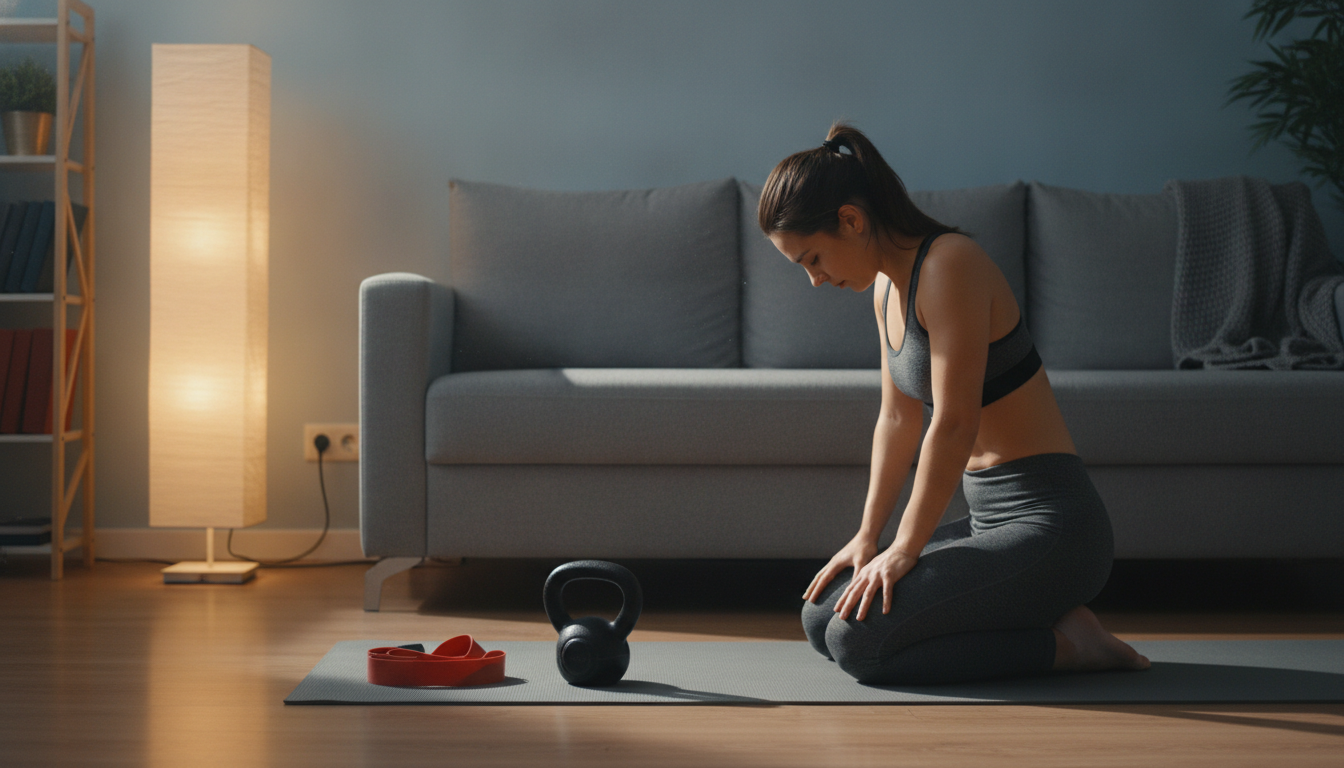
Your workout looks like this: fifty air squats, then a sixty-second plank, then ten push-ups, then forty seconds of mountain climbers, three times through. Half of it is counted, half of it is clocked. Every timer you open wants to know how long each round lasts, and the honest answer for the squats is "however long fifty takes."
So you guess. You give the squats ninety seconds, finish in seventy, and stand around waiting for the beep. Or you give them sixty and the plank starts while you are still on rep forty-one. Some people give up and run a stopwatch beside a countdown, and lose their place in both by round two.
Why one clock can still run the whole thing
The fix is not a smarter app that counts your reps. It is treating each rep round as a time box: a fixed window that holds the reps plus whatever is left over, which becomes your transition. The counted work stays counted — you still do all fifty squats — but the clock owns the session, so the timed rounds land where they should and you never touch the phone.
This is the same idea that makes an EMOM work. The minute is fixed, the reps fit inside it, and the remainder is rest. You are just applying it round by round, with a different box size for each rep block.
How to size a rep block so the timer stays honest
Do one test round with a stopwatch, or time a single set in your warm-up. Note how long each rep block took when you were fresh. Fifty air squats might take 60 seconds; ten push-ups might take 20.
Then add a buffer for fatigue and the move to the next station. Around 25% is a sensible start for the first round, so 60 seconds of squats becomes a 75-second block, and 20 seconds of push-ups becomes 25. Round your numbers to the nearest five so the session is easy to read back.
If you finish a block with more than about 15 seconds left in round one, the box is too big. If you are still working when the next cue fires by round two, it is too small. Adjust by five seconds and run it again next time; within two sessions the boxes fit.
Laying out the session
For the example above, three rounds, the build looks like this:
- Prep — 10 seconds to get on the mat.
- Squats (50 reps) — 75-second block.
- Plank — 60 seconds.
- Push-ups (10 reps) — 25-second block.
- Mountain climbers — 40 seconds.
- Rest — 60 seconds, then repeat.
That is 4 minutes 20 seconds a round and about 13 minutes for the session, which you now know before you start. Name each phase after the movement and its rep count, so the cue tells you what comes next without you having to remember.
In Peak Interval each of those is its own phase in a saved workout, with a prep phase in front and the rest block repeating with the rounds. The audio and haptic cue at each boundary is what makes the time box work: you hear the change on the plank, feel it on the wrist with the Apple Watch, and the phone stays face down. If a rep block genuinely overruns, pause, finish the reps, and resume rather than skipping the rest of the round.
When the time box is the wrong tool
Some workouts are meant to be done "for time": the whole point is how fast you get through the reps. Boxing those removes the score. Run them on a plain stopwatch and log the finish time, then return to the boxed version on days when the goal is a consistent session rather than a record.
Very heavy sets are the other exception. Five reps of a near-max deadlift should be followed by whatever rest you need, not a fixed window, so time the rest rather than the lift.
The short version
Time your rep blocks once, add about 25% for fatigue and transitions, and give each one its own phase alongside the timed rounds. You keep counting reps, the clock keeps the session moving, and the only adjustment you will ever make is five seconds either way after the first workout.