Hangboard Repeaters Timer: Set Up 7/3 Hangs Without Counting
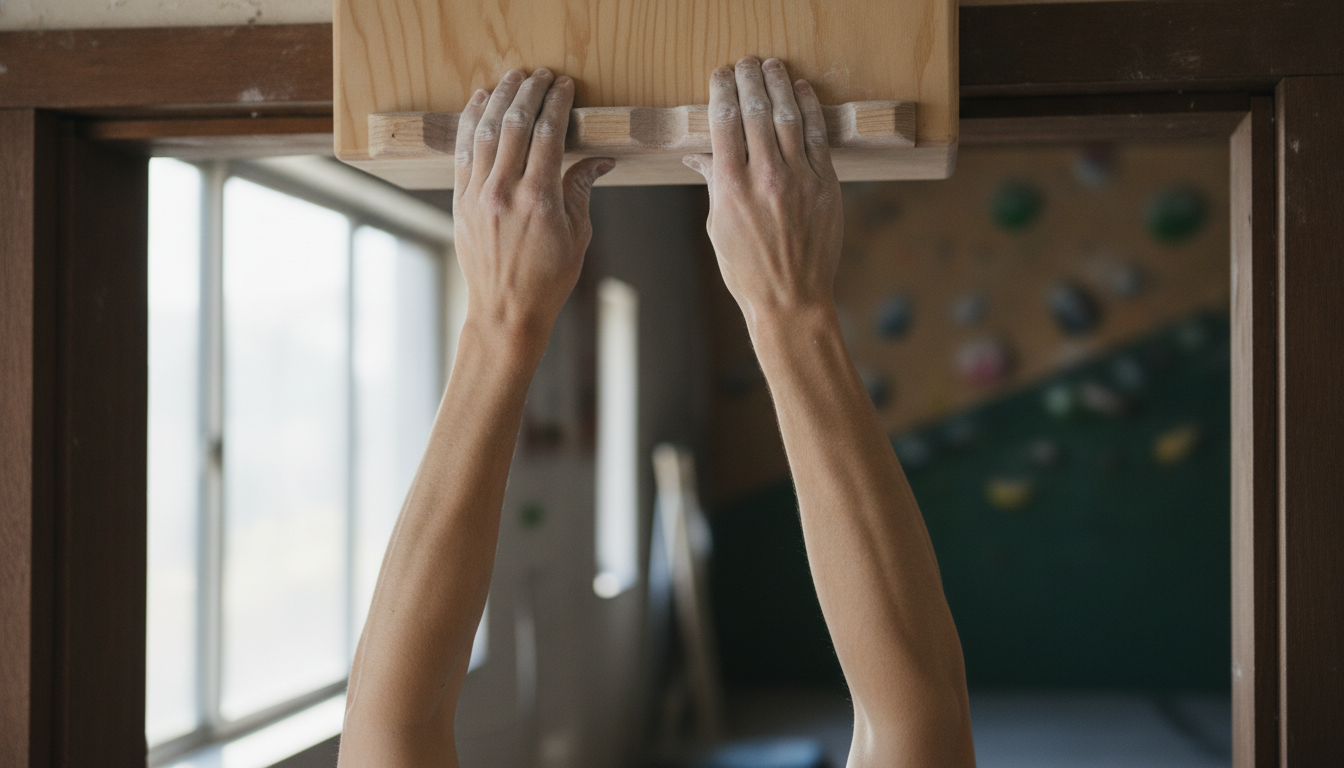
You step up to the board intending to do repeaters: seven seconds on, three seconds off, six times, then a proper rest. By the third hang you are trying to count, squeeze and remember whether that was rep four or five. The set gets shorter or longer depending on how much it burns, which makes it hard to know what you actually trained.
A repeater session is not complicated, but it has more moving parts than a stopwatch handles well. The short hang and rest cycle needs to repeat cleanly, the long break between sets needs to start on its own, and the whole session needs to end before you do an accidental extra set with tired fingers.
What a hangboard repeater actually looks like
The common starting structure is 7 seconds hanging, 3 seconds resting, repeated six times. That makes one set exactly 60 seconds: 42 seconds on the hold and 18 seconds off it. You then rest for two to three minutes before starting the next set.
The numbers are not magic. Some plans use 10/5, some use fewer reps, and the hold size, grip and added weight change the difficulty more than a one-second difference does. The useful part is keeping the work and rest exactly the same from one set to the next, so you can tell whether the session is getting easier rather than wondering whether you quietly gave yourself an extra breath.
For a first repeater session, keep the total modest. Three sets of 7/3 × 6 with three minutes between them is plenty for most climbers who are new to structured finger training. Warm your fingers and shoulders first, use a hold you can control with good form, and stop if pain feels sharp or specific rather than like ordinary forearm fatigue.
Build the timer as a nested interval
The clean setup has three phases: a short preparation countdown, a 7-second hang, and a 3-second rest. Repeat the hang/rest pair six times, then put a longer rest block after the final 3-second recovery. Repeat that whole set for however many sets you planned.
Written out, one three-set workout looks like this:
- Prepare: 10 seconds
- Hang: 7 seconds
- Rest: 3 seconds
- Repeat hang and rest until you have completed six hangs
- Set rest: 3 minutes
- Repeat the full set twice more, skipping the final long rest if you do not need it
This is why a timer with only one repeating 7/3 block can be frustrating. It will happily keep cycling forever, but it does not know that six short rests make a set or that the next pause should be long enough to shake out, drink and recover.
Use cues that let you keep your eyes off the clock
During a hang, looking down at a phone is not just awkward. It changes your shoulder position and makes the set less repeatable. The point of a timer is to remove that job from your head.
Set a distinct cue for the start of the hang and another for the rest if your timer supports it. A voice cue is useful when you are facing the board; a short countdown before the next hang is useful because it gives you time to reset your grip instead of getting surprised by the first second.
Peak Interval can save this as a named sequence with a prep phase, the repeating 7/3 block, a long set rest and a defined number of sets. Its audio cues carry the transitions from across the room, and the Apple Watch companion adds a haptic cue if you are training somewhere noisy. Save the session once, then change the hold or added weight without rebuilding the clock every time.
Do not let the long rest drift
The three-second rest inside a set is part of the exercise. The two- or three-minute rest after the set is what lets you repeat the quality of it. When that longer break becomes four minutes because you started talking, or one minute because you were impatient, the next set no longer means the same thing.
Keep the long rest on the same timer rather than starting a separate stopwatch. When the timer announces the next set, you know it is time to get back on the board, not time to decide whether you feel recovered enough. That consistency is also what makes a later session comparable: if you add one set or use a smaller edge, you know the rest did not quietly change too.
If you are mixing repeaters with exercises that end when you decide they are done, such as heavy pull-ups or carries, use a timer with a manual set advance for those blocks. An interval timer with a set counter explains that setup; repeaters are different because the short hang and rest are fully timed inside each set.
The short version
Set 7 seconds of hanging and 3 seconds of rest for six rounds, then add two to three minutes between sets. Give the hang and rest different cues, include a short prep countdown, and tell the timer how many sets you are doing so it ends when your plan ends. You should be thinking about grip and body position while you are on the board, not whether the last beep came five or nine seconds ago.